 Pin It
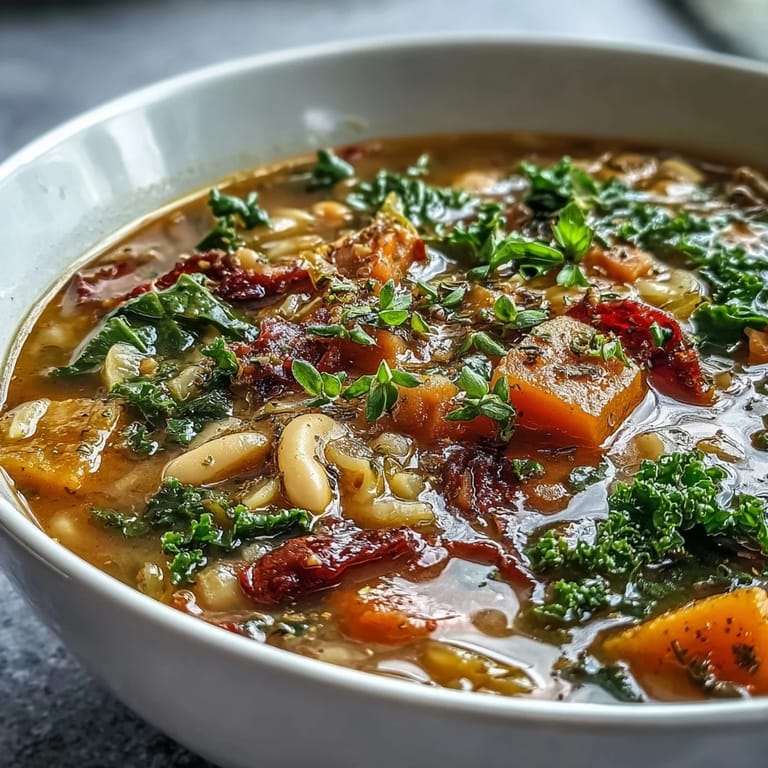
 My kitchen filled with steam the moment I opened the oven door last November, and somehow a bowl of minestrone felt like the answer to everything that day. There's something about layering vegetables into a pot, watching them soften and release their sweetness, that makes you feel like you're actually doing something good. This soup came together almost by accident when I had butternut squash and kale sitting on the counter, both needing to be used before they got sad in the crisper drawer. The smell that fills your house while it simmers is honestly worth the effort alone.
I made this for my neighbor Sarah who'd just come home from the hospital, and watching her face when she tasted it made me understand why people have been making soup for sick friends literally forever. She asked for the recipe before she'd even finished the bowl, which felt like the highest compliment. That's when I realized minestrone isn't fancy or complicated—it's just honest food that says someone was thinking of you.
Ingredients
- Olive oil: Two tablespoons is the foundation here, nothing fancy needed, just something that smells good when it hits the hot pot.
- Yellow onion, carrots, and celery: The holy trinity that makes everything taste like home, diced medium so they cook evenly without falling apart into nothing.
- Garlic cloves: Three cloves minced fine, because raw garlic chunks are honestly a betrayal of trust in a soup this gentle.
- Butternut squash: Three cups cubed, the star that adds natural sweetness and that creamy texture without any cream involved.
- Zucchini: One medium, diced, adds lightness and a subtle vegetal quality that keeps things from feeling too heavy.
- Diced tomatoes: One 14-ounce can, the acidic backbone that balances the sweetness and brings brightness to every spoonful.
- Kale: Four cups chopped, after you remove those woody stems nobody enjoys, adds iron and heartiness that makes you feel like you're actually eating vegetables.
- Cannellini beans: One 15-ounce can drained and rinsed, the protein that transforms this from side dish territory into actual dinner.
- Small pasta: One cup of ditalini or elbow, cooks in the broth so every piece absorbs flavor, swap for gluten-free if needed.
- Vegetable broth: Six cups, the liquid that carries everything together, use the kind you like the taste of on its own because it matters.
- Bay leaf, oregano, thyme, and rosemary: A pinch of each dried herb, together they smell like an Italian grandmother's kitchen and taste like warmth.
- Salt and pepper: To taste, your seasoning compass, tasted at the end because soup is forgiving about this part.
Tired of Takeout? 🥡
Get 10 meals you can make faster than delivery arrives. Seriously.
One email. No spam. Unsubscribe anytime.
Instructions
- Build your flavor base:
- Heat olive oil in a large pot over medium heat until it shimmers slightly, then add your diced onion, carrots, and celery. Let them sauté for about five minutes, stirring occasionally, until the onion turns translucent and the whole kitchen smells like you're doing something important.
- Wake up the garlic:
- Stir in your minced garlic and let it cook for just one minute—you want it fragrant and softened, not browned and bitter, which happens faster than you'd think.
- Add the squash:
- Toss in your butternut squash cubes and diced zucchini, stirring to coat them in the oil, and cook for another five minutes until everything starts to smell like autumn.
- Build the broth:
- Pour in your diced tomatoes, vegetable broth, bay leaf, and all those dried herbs, then bring everything to a boil, which honestly takes longer than you expect so don't hover over it.
- Let it simmer:
- Reduce heat to medium-low, cover the pot, and let it bubble gently for fifteen minutes until the squash is fork-tender but not falling apart into mush. This is when you can actually sit down for a moment.
- Finish strong:
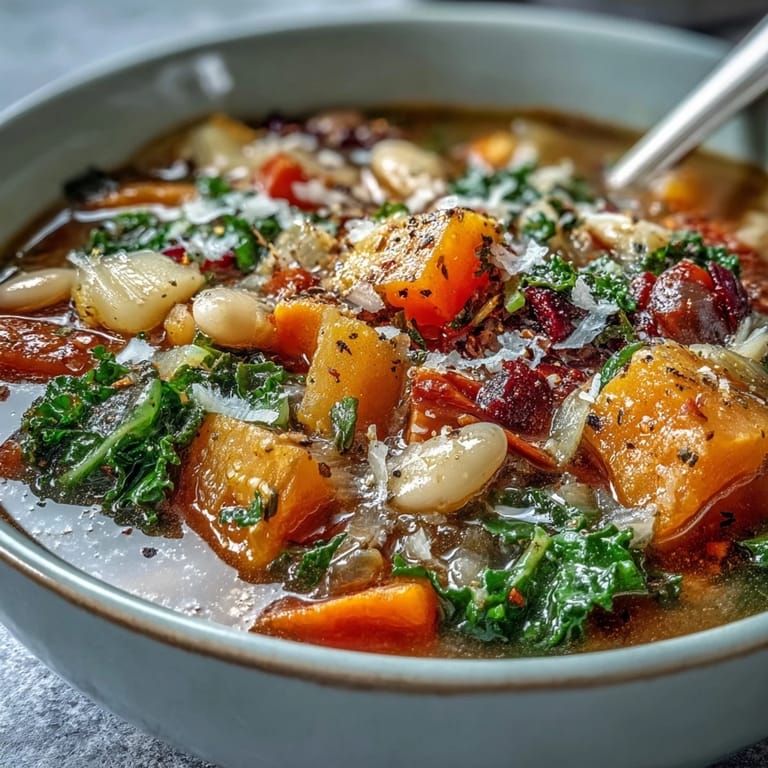
- Add your beans, pasta, and kale, stirring to distribute everything evenly, then simmer uncovered for ten to twelve minutes until the pasta is tender and the kale has surrendered into wilted softness. Taste it now and adjust seasoning because salt and pepper are your friends here.
- Serve with intention:
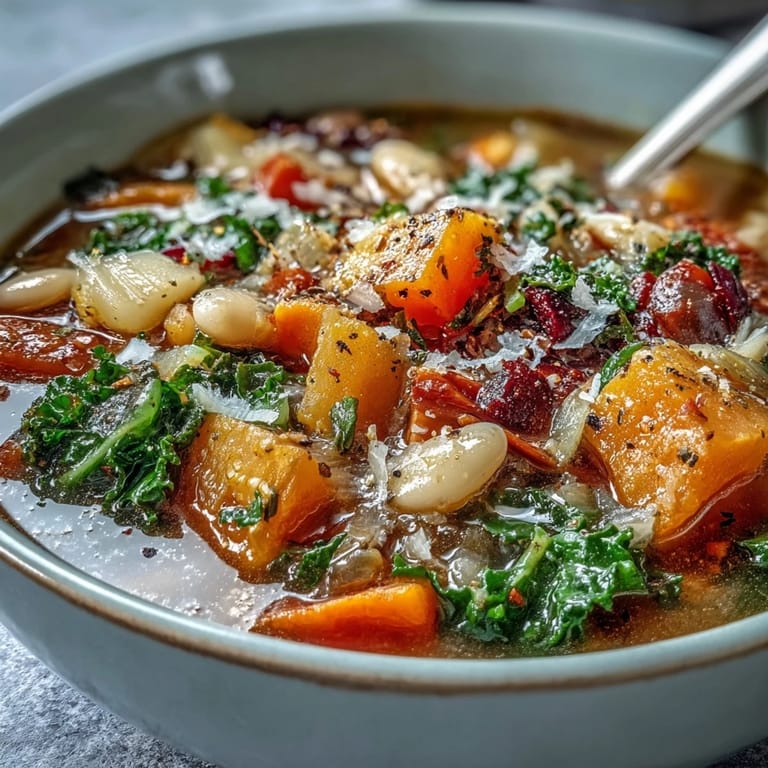
- Remove that bay leaf, ladle into bowls, and top with Parmesan and fresh parsley if you have them, serving alongside crusty bread for soaking up every drop.
 Pin It
  Pin It
 There was a morning in early December when my daughter came downstairs complaining about how everything felt heavy and sad, and I made this soup without even planning to. By lunchtime she'd had two bowls and asked if we could make it again next week, which is when I understood that comfort food isn't really about the ingredients—it's about someone saying they care by spending time at the stove. Food has that power sometimes, especially when it's simple and warm and arrives exactly when you need it.
The Magic of Layering Flavors
I learned by mistake that the order you add things actually matters enormously in soup, not because of science textbooks but because I once added the kale at the beginning and it turned into a murky green mush that tasted vaguely like boiling a lawn. The vegetables need to soften first, the broth needs to develop character, and then—only then—do you add the delicate things that need just enough time to surrender without disappearing. It's honestly the same principle as getting to know someone: you start with surface-level conversation, then gradually reveal deeper things as trust builds.
Why This Works as Leftovers
Minestrone genuinely tastes better on day two, which I discovered by accident when I brought leftovers to my office and everyone kept asking what smelled so good. The flavors marry together overnight, the pasta absorbs more broth, and somehow everything tastes more cohesive and intentional than it did fresh. It's also one of those rare soups that doesn't fall apart when reheated, making it perfect for meal prep or just having dinner already waiting when you're exhausted.
Variations That Actually Make Sense
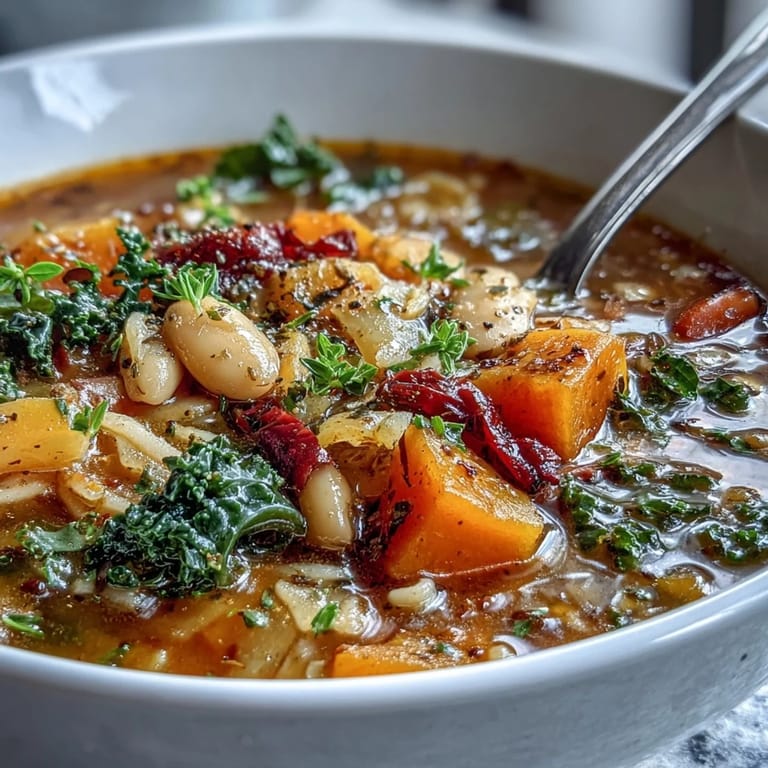
The beauty of minestrone is that it adapts without losing its soul—substitute spinach for kale if that's what you have, use regular pasta or skip it entirely and add extra beans, swap butternut squash for pumpkin or even regular potatoes if that's what your season calls for. I've made it with added Parmesan rind simmering in the broth, which sounds fancy but honestly just means you're letting cheese do extra flavor work while you're not paying attention. The formula stays the same while everything else negotiates, which is why home cooks have been making versions of this soup for centuries.
- For gluten-free eating, use rice pasta or small gluten-free shapes and nobody will notice the difference.
- Add a Parmesan rind to the broth while simmering and fish it out before serving for background cheese flavor that feels like a secret.
- If you have vegetable scraps like carrot tops or celery leaves, throw them in the pot with the broth for extra depth.
 Pin It
  Pin It
 Make this when you need something warm and honest, when someone you love needs feeding, or just because it's January and your body is asking for vegetables in a way it doesn't usually. This soup doesn't need applause or complicated techniques—it just needs time, attention, and the understanding that sometimes the best meals are the simplest ones.
Recipe FAQs
- → Can I make this soup ahead of time?
Yes, minestrone tastes even better the next day as the flavors meld together. Store in an airtight container in the refrigerator for up to 4 days. Note that the pasta will absorb liquid, so you may need to add extra broth when reheating.
- → What can I substitute for butternut squash?
Sweet potato, pumpkin, or acorn squash work beautifully as substitutes. You can also use russet potatoes for a more traditional approach. Simply cube them to similar sizes for even cooking.
- → How do I make this soup heartier?
Add an extra can of beans, increase the pasta amount, or incorporate cooked Italian sausage for a non-vegetarian version. You can also serve with thick slices of crusty bread or garlic toast.
- → Can I freeze winter minestrone?
Yes, but it's best to freeze it without the pasta, as pasta can become mushy when frozen and reheated. Add freshly cooked pasta when you reheat the soup. Freeze in portions for up to 3 months.
- → What type of kale works best?
Lacinato kale (also called dinosaur kale) is ideal for soups as it's more tender, but curly kale works well too. Remove the tough stems and chop the leaves into bite-sized pieces for the best texture.
- → How can I add more protein to this soup?
Beyond the cannellini beans, you can add chickpeas, white beans, or kidney beans. For non-vegetarians, shredded rotisserie chicken or Italian sausage are excellent additions that complement the Italian flavors.