 Pin It
 There's something about October that makes me crave soup, and this minestrone landed on my stove one cool evening when I found myself staring at a pile of farmers market vegetables and wondering what to do with them. My neighbor had dropped off a butternut squash the size of a small child, and I had kale wilting in my crisper drawer, so I started layering flavors without a strict plan. The pancetta went in first because, well, why not add a little smoke and salt to everything? By the time the kitchen smelled like caramelized vegetables and herbs, I realized I'd stumbled onto something that felt both elegant and deeply comforting.
I made this for my book club once on a November night when everyone was tired and hungry, and it became the kind of dish people asked for the recipe for before they'd even finished their bowls. One friend went back for thirds and admitted she'd been skeptical about kale in soup until that moment. That's when I knew this minestrone had something special: it doesn't feel like virtuous eating, it feels like being taken care of.
Ingredients
- Pancetta, diced: The rendered fat becomes your flavor base, so don't skip it even if you're using vegetable broth.
- Olive oil: Extra virgin if you have it, because it adds a grassy note that lifts the whole pot.
- Yellow onion, carrots, and celery: This holy trinity is non-negotiable; together they create the foundation that makes every other ingredient taste better.
- Butternut squash: Peel and cube it fresh if you have time, though honestly frozen works beautifully and saves your hands from that wrestling match.
- Garlic cloves: Mince them fine so they disappear into the broth and season everything invisibly.
- Kale: Remove those tough stems or you'll be chewing on them later; the tender leaves wilt perfectly in the final minutes.
- Diced tomatoes: Canned is perfect here because the tomatoes have been sitting in their own juice long enough to develop deep flavor.
- White beans: Drain and rinse them well to keep the broth from getting cloudy and starchy.
- Ditalini or small pasta: These little tubes catch broth in every bite, but any small shape works if that's what you have.
- Chicken or vegetable broth: Good quality matters more than you'd think; it's half your soup.
- Fresh thyme, bay leaf, salt, and pepper: The thyme brings an herbaceous whisper while the bay leaf deepens everything.
- Fresh parsley and Parmesan: These are your finishing touches, not optional flourishes.
Tired of Takeout? 🥡
Get 10 meals you can make faster than delivery arrives. Seriously.
One email. No spam. Unsubscribe anytime.
Instructions
- Render the pancetta:
- Heat olive oil in your largest pot, then add the diced pancetta and let it cook over medium heat until the edges turn crispy and golden, about 5 minutes. You'll smell that savory pork fat releasing, and that's when you know it's working. Scoop it out with a slotted spoon and set it aside on a paper towel, leaving all that precious fat behind in the pot.
- Build your soffritto:
- Toss in the diced onion, carrots, and celery to that hot fat and let them soften for about 5 minutes, stirring occasionally so they don't stick. They'll start to turn golden at the edges and smell incredible, which means you're on the right track.
- Toast the squash and garlic:
- Add your cubed butternut squash and minced garlic to the pot and cook for just 2 minutes until the garlic releases its aroma and coats everything with fragrance. This short time awakens the flavors without letting anything burn.
- Add the liquids and seasonings:
- Pour in the canned tomatoes with all their juice, the drained white beans, and your broth, then add the thyme leaves, bay leaf, salt, and pepper. Bring everything to a simmer, which should take about 5 minutes, and adjust the heat so it's bubbling gently.
- Let it simmer:
- Cover the pot and let it cook for 20 minutes until the butternut squash is fork-tender and the flavors have melded together. You can walk away during this time, which is one of the great gifts of minestrone.
- Finish with greens and pasta:
- Stir in the chopped kale and dried pasta, then simmer uncovered for 8 to 10 minutes until the pasta reaches that perfect al dente texture and the kale turns a deeper green. Taste as you go because pasta absorbs salt and will change your seasoning balance.
- Taste and adjust:
- Fish out the bay leaf, then taste the soup and add more salt or pepper if it needs it. This is your last chance to make it exactly right before serving.
- Serve with respect:
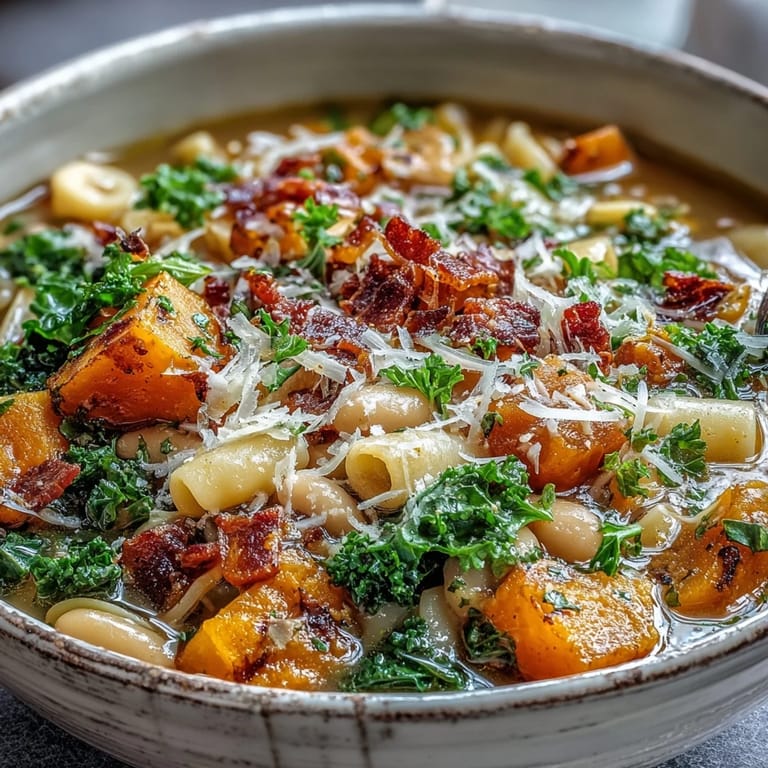
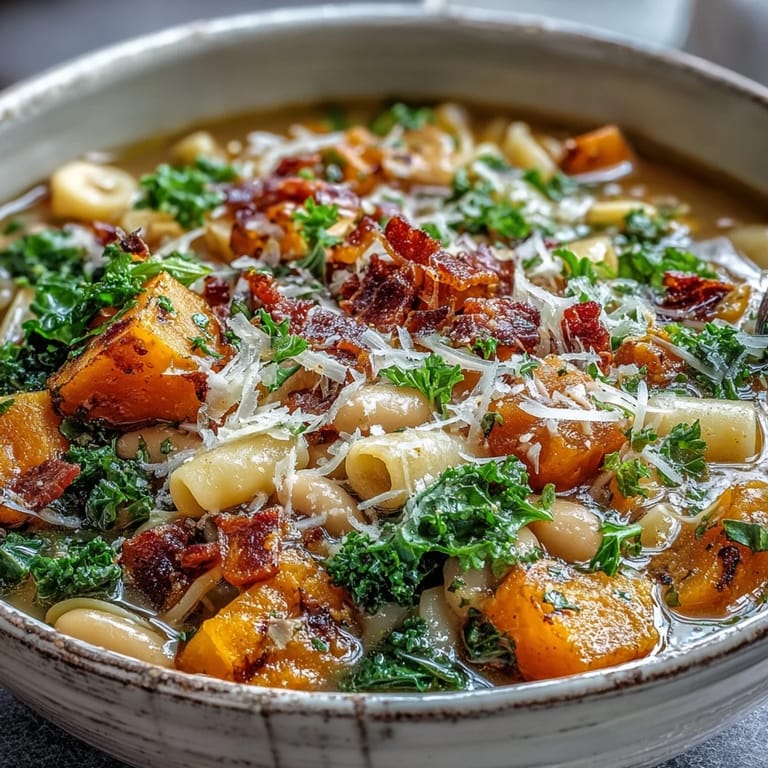
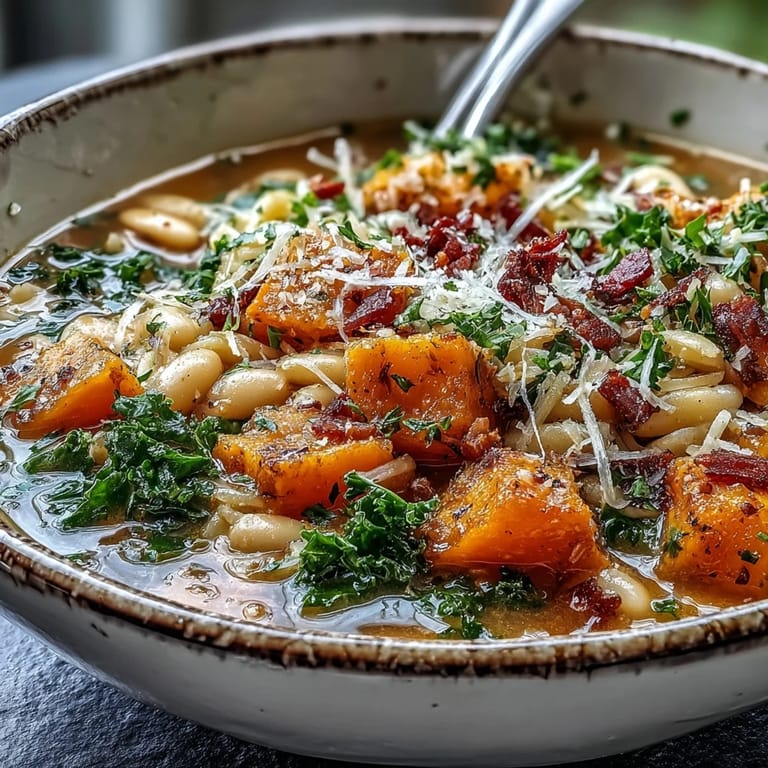
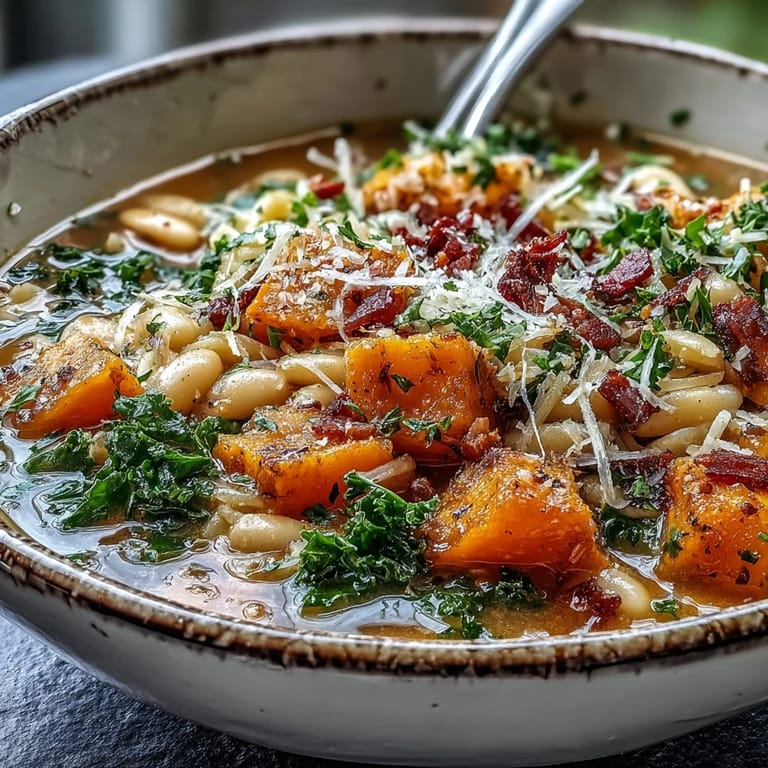
- Ladle the soup into bowls and top each one with some of that reserved pancetta, a scatter of fresh parsley, and a generous handful of freshly grated Parmesan. The cheese melts slightly into the hot broth and ties everything together.
 Pin It
  Pin It
 There was a moment last winter when my son came home from school complaining about everything, and I set a bowl of this soup in front of him without any fanfare. He ate the whole thing silently, and when he looked up, he'd already forgotten whatever was bothering him. That's when I understood that this minestrone is more than just dinner; it's a quiet way of saying you matter to someone.
The Magic of Butternut Squash
Butternut squash is the secret ingredient that transforms this soup from merely good to unexpectedly luxurious because it breaks down slightly during cooking and creates a natural creaminess without a drop of cream. The first time I made this, I was shocked that something so wholesome could taste so indulgent, and now I never make minestrone without it. If you can't find butternut squash, carrots work, but you'll lose that distinctive sweetness that makes autumn feel like it's right there in your bowl.
Making It Your Own
The beauty of minestrone is that it's forgiving enough to let you work with whatever you have on hand, whether that's a different pasta shape, zucchini instead of squash, or spinach when kale isn't available. I've made it with what felt like random vegetables left over from other meals and somehow it always comes together because the broth and pancetta fat hold everything together. The only thing I'd never skip is the thyme and bay leaf because those dried herbs do the heavy lifting that makes this feel like you planned it all along.
Serving Suggestions and Storage
This soup tastes even better the next day when all the flavors have had time to get to know each other, so don't hesitate to make it ahead and reheat it gently on the stove. Serve it with crusty bread for soaking up every drop, or with a simple salad if you want something lighter alongside. It keeps beautifully in the refrigerator for about four days and freezes well for up to three months, though I'd recommend freezing it before you add the pasta so you can cook fresh pasta when you reheat it.
- A glass of light Pinot Noir or even a crisp white wine pairs beautifully with this soup without overwhelming it.
- If you're making the vegetarian version, a tiny pinch of smoked paprika where the pancetta would have been gives you back that depth.
- Always taste before serving because broth brands vary wildly in their saltiness, and you want to be the one controlling the seasoning.
 Pin It
  Pin It
 This minestrone has become my answer to almost every question about what to cook when you want something nourishing and real. It's the kind of soup that reminds you why people have been making minestrone for centuries.
Recipe FAQs
- → Can I make this minestrone vegetarian?
Yes, simply omit the pancetta and use vegetable broth instead of chicken broth. Add a pinch of smoked paprika to maintain depth of flavor.
- → What pasta shapes work best in minestrone?
Ditalini is traditional, but any small pasta like elbow macaroni, small shells, or orzo works well. Adjust cooking time according to package instructions.
- → How do I store leftover minestrone?
Store in an airtight container in the refrigerator for up to 4 days. Note that pasta will absorb liquid, so you may need to add broth when reheating.
- → Can I use frozen butternut squash?
Absolutely. Frozen pre-cubed butternut squash is a convenient time-saver and works perfectly in this soup. No need to thaw before adding.
- → What can I serve with this minestrone?
Crusty Italian bread or focaccia pairs beautifully for dipping. A simple green salad and a glass of light Pinot Noir complete the meal.
- → Is this soup freezer-friendly?
Yes, but it's best to freeze without the pasta. Cook pasta fresh when reheating to prevent it from becoming mushy. Freeze for up to 3 months.