 Pin It
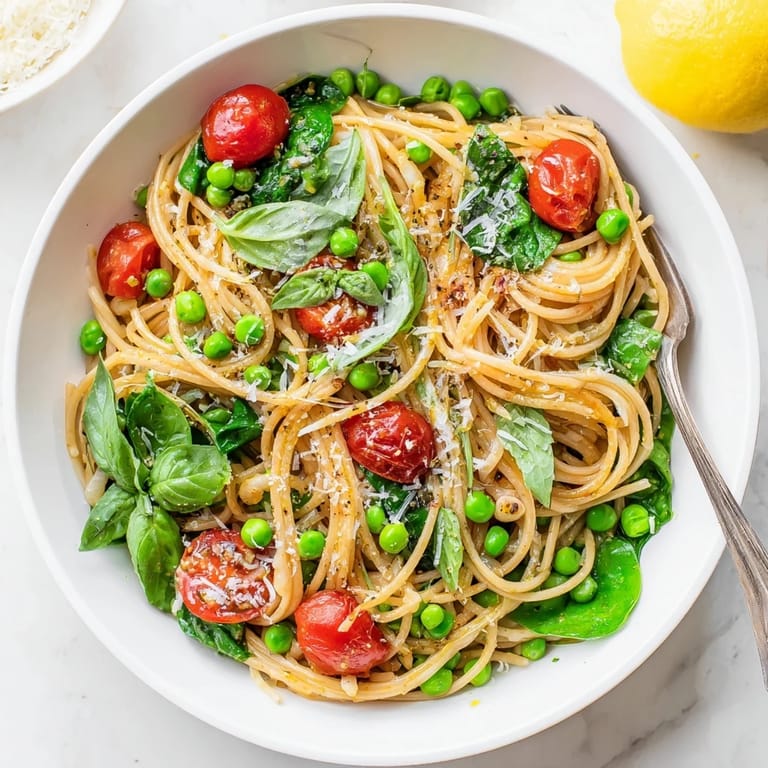
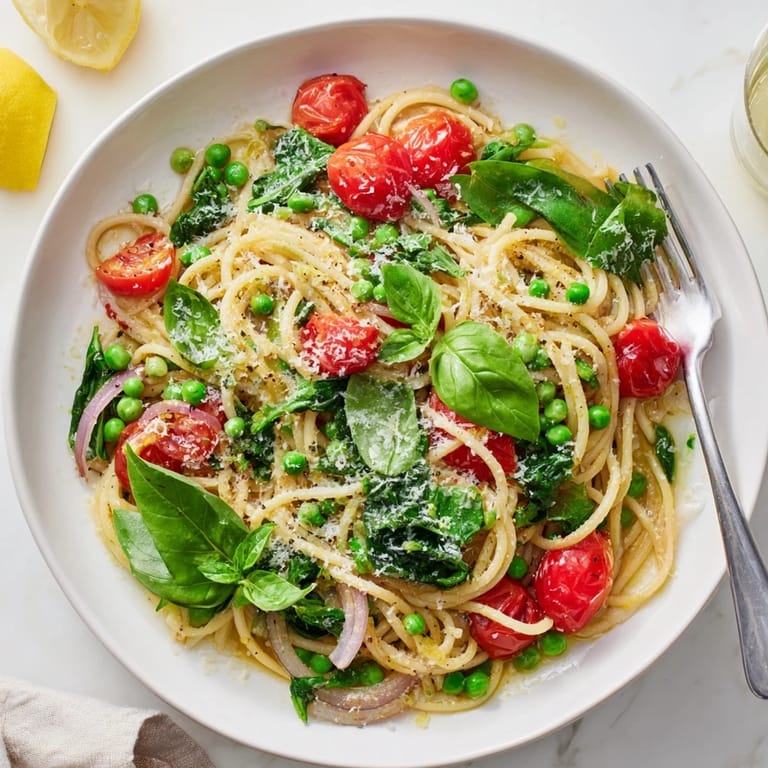
 The first time I made this spaghetti, it was a rainy Tuesday and I had zero energy for a multi-step dinner. I threw everything in one pot, skeptical that pasta could cook properly right in the broth. Twenty minutes later, I was scraping the bottom of the pot for every last creamy, vegetable-studded strand.
Last spring, my sister dropped by unexpectedly while this was simmering. She kept asking what sauce I was making, looking genuinely confused when I said there was no sauce. We ate standing up in the kitchen, and she made me write the recipe on a napkin before she left.
Ingredients
- 350 g (12 oz) dried spaghetti: The pasta releases starch into the broth as it cooks, creating a naturally creamy coating that clings beautifully to every strand
- 150 g (1 cup) frozen or fresh peas: These add pops of sweetness and vibrant green color, and frozen ones work perfectly without any prep
- 100 g (3.5 oz) baby spinach: Wilts right into the pasta, adding nutrients and a lovely earthy flavor without any chopping required
- 200 g (7 oz) cherry tomatoes, halved: Burst during cooking, releasing their juices into the broth for a subtle tomato sweetness throughout
- 2 cloves garlic, thinly sliced: Sliced rather than minced, they mellow and sweeten as they cook, infusing the oil before the broth goes in
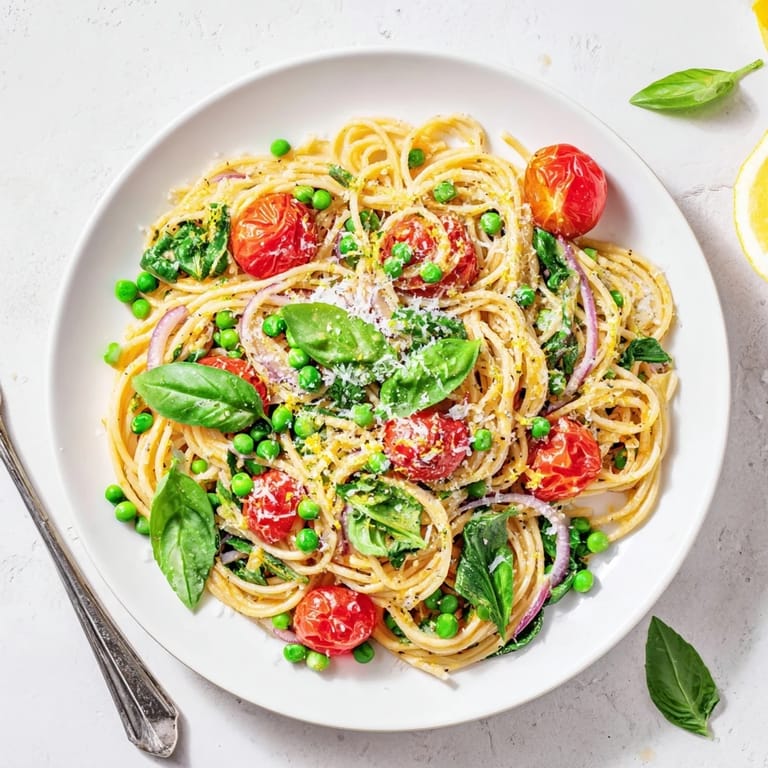
- 1 small red onion, thinly sliced: Adds a gentle sweetness and beautiful purple ribbons throughout the dish
- 1 L (4 cups) vegetable broth: This becomes your cooking liquid and sauce combined, so use a good quality one you would happily drink on its own
- 2 tbsp olive oil: Start with this to sauté the aromatics, adding richness and helping carry all the flavors
- 1/2 tsp salt: Essential since the broth is your only seasoning opportunity
- 1/4 tsp black pepper: Adds a gentle warmth that balances the sweet vegetables
- 1/4 tsp red pepper flakes: Optional, but a lovely subtle heat that cuts through the starchiness
- Zest of 1 lemon: Stirred in at the end, this brightens everything and makes the spring flavors sing
- 30 g (1/4 cup) grated Parmesan: Adds a salty, umami richness that ties all the vegetables together
- Fresh basil leaves: Torn over right before serving for that final aromatic touch
Tired of Takeout? 🥡
Get 10 meals you can make faster than delivery arrives. Seriously.
One email. No spam. Unsubscribe anytime.
Instructions
- Sauté the aromatics:
- Heat olive oil in a large pot over medium heat, add sliced garlic and red onion, cook for 2 to 3 minutes until fragrant and softened
- Add everything to the pot:
- Add spaghetti, peas, spinach, and tomatoes, pour in vegetable broth, and bring to a boil
- Season and stir:
- Add salt, pepper, and red pepper flakes, stir occasionally to prevent pasta from sticking together
- Simmer to perfection:
- Cook uncovered for 10 to 12 minutes until pasta is al dente and most liquid is absorbed, then stir in lemon zest
- Finish and serve:
- Remove from heat, divide among plates, and top with grated Parmesan and fresh basil leaves
 Pin It
 This recipe has become my go-to for those nights when I want something comforting but not heavy, something that feels like self-care without requiring anything resembling effort from me.
Making It Your Own
I have discovered that adding a drained can of chickpeas in step two turns this into a protein powerhouse without changing the cooking method at all. Sometimes I throw in asparagus tips when they are in season, and they cook right alongside the pasta.
Perfect Pairings
A crisp white wine like Sauvignon Blanc cuts through the starch beautifully. For a complete meal, a simple green salad with a sharp vinaigrette balances the pasta perfectly.
Make Ahead Wisdom
This pasta is best enjoyed immediately while the sauce is at its creamiest. The leftovers do reheat well with a splash of water, though the texture becomes more like traditional pasta dishes.
- Halve the cherry tomatoes ahead of time and store them in the fridge
- Measure all spices into a small bowl before starting for smoother cooking
- Have your lemon zested before you begin so you can stir it in right at the perfect moment
 Pin It
 Some of the best dinners come from the simplest ideas, and this one-pan wonder has saved me more weeknights than I can count.
Recipe FAQs
- → Can I use fresh pasta instead of dried?
Fresh pasta cooks more quickly than dried, so reduce the cooking time to 4-6 minutes and add less broth initially. You may need to adjust liquid quantities as fresh pasta absorbs less liquid during cooking.
- → What other vegetables work in this dish?
Asparagus, snap peas, or zucchini make excellent additions. Add heartier vegetables like asparagus with the onions, and tender vegetables like zucchini during the last 5 minutes of cooking.
- → Can I make this gluten-free?
Simply substitute the regular spaghetti with your favorite gluten-free pasta. Brown rice spaghetti or chickpea pasta work well—just follow package instructions for cooking time as they may differ slightly.
- → How do I store leftovers?
Store in an airtight container in the refrigerator for up to 3 days. The pasta will continue to absorb liquid, so add a splash of water or broth when reheating to restore the creamy consistency.
- → Can I use water instead of vegetable broth?
Water works in a pinch, but vegetable broth provides deeper flavor. If using water, increase the salt slightly and consider adding a bouillon cube or extra garlic and herbs to maintain richness.