 Pin It
 My grandmother taught me that biscuit making is part science, part prayer. She'd measure by feel more than cups, and somehow hers always rose higher than anyone else's. I spent years trying to decode her magic until I realized it wasn't magic at all—it was cold everything and light hands. Now my kitchen smells like hers every Sunday morning.
Last winter, during that week we got snowed in, I made three batches back to back. My neighbor's kids knocked on the door because they'd smelled them baking through the walls. We ended up having an impromptu snow day breakfast with just-baked biscuits, whatever jam we could find between us, and too much coffee.
Ingredients
- 2 cups all-purpose flour: The foundation of your biscuits, providing structure and that tender crumb we're after
- 1 tablespoon baking powder: Your main leavening agent, giving these biscuits their impressive rise
- ½ teaspoon baking soda: Works with the buttermilk's acidity for extra lift and browning
- 1 teaspoon fine sea salt: Enhances all flavors and balances the richness
- 1 tablespoon granulated sugar: Just enough to help with browning and lend subtle sweetness
- ½ cup cold unsalted butter, cubed: The secret to flaky layers—keep it refrigerator-cold until the moment it hits the flour
- ¾ cup cold buttermilk: Adds tang and activates the baking soda for maximum height
Tired of Takeout? 🥡
Get 10 meals you can make faster than delivery arrives. Seriously.
One email. No spam. Unsubscribe anytime.
Instructions
- Preheat your oven to 425°F and line a baking sheet:
- That high heat is crucial for the initial burst of steam that creates lift
- Whisk together your dry ingredients:
- Get them evenly distributed so every biscuit rises uniformly
- Work in cold butter until you see coarse crumbs:
- Those pea-sized butter pieces will melt into steam pockets, creating all those flaky layers
- Make a well and pour in cold buttermilk:
- Stir until just barely combined—shaggy dough makes tender biscuits
- Fold and pat the dough three times:
- This creates laminated layers for that professional bakery texture
- Cut straight down with your biscuit cutter:
- Twisting seals the edges and prevents rising—press firmly and lift straight up
- Place close together and brush with buttermilk:
- Crowding helps them rise taller, while the wash encourages golden color
- Bake 13–15 minutes until deeply golden:
- They should feel light and sound hollow when tapped on the bottom
 Pin It
 My friend Sarah claimed she couldn't bake until she made these at my house last spring. She called me that same night, breathless with excitement, because hers had actually risen. Now she sends me photos of her biscuit adventures every weekend.
The Cold Ingredient Rule
Everything that can be cold should be cold—butter, buttermilk, even your bowl and tools if possible. I've started measuring my buttermilk into a measuring cup kept in the freezer. Those tiny temperature differences mean the difference between good biscuits and great ones.
Understanding The Folding Technique
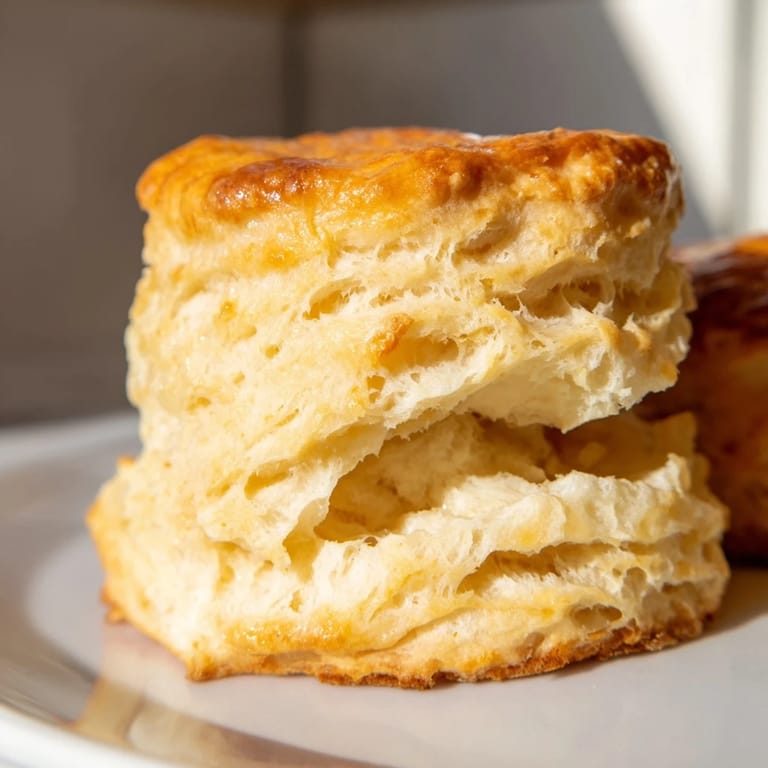
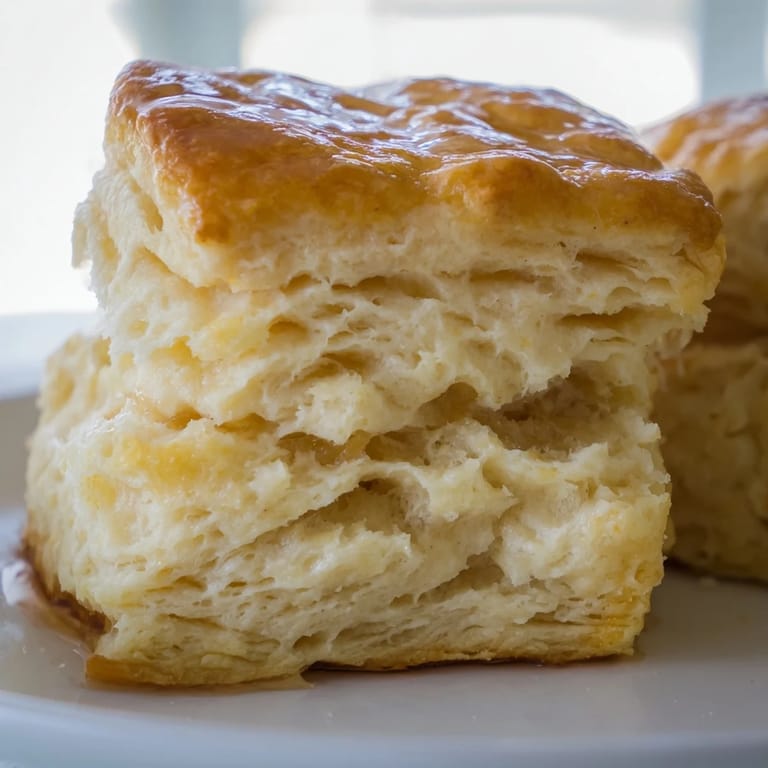
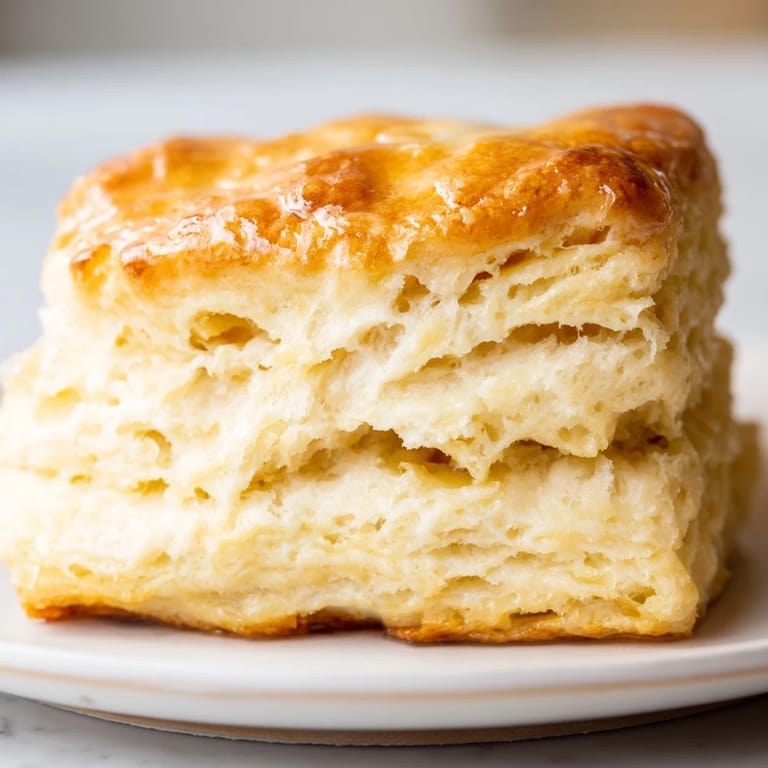
Those three folds aren't just extra steps—they're creating layers like a pastry chef would. Each fold traps butter between thin sheets of dough. When the oven heat hits, that butter steams and pushes the layers apart. It's the same principle as croissants, just simplified.
Getting Creative With Add-Ins
Once you master the basic recipe, the variations become endless. I've made these with everything from sharp cheddar to fresh rosemary to cracked black pepper. The key is folding your additions in gently during that last fold so you don't overwork the dough.
- Add grated cheese after the first fold so it stays distributed
- Brush melted butter instead of buttermilk for an extra golden crust
- Freeze uncut dough for up to a week and bake fresh anytime
 Pin It
 There's something deeply satisfying about pulling a tray of tall, golden biscuits from the oven. Serve them warm, slathered with butter and your favorite jam, and watch them disappear.
Recipe FAQs
- → Why must the butter and buttermilk be cold?
Cold butter creates small pockets of steam as it melts in the oven, producing flaky layers. If the butter warms up before baking, it blends into the flour rather than staying in distinct pieces, resulting in denser biscuits.
- → Can I make the dough ahead of time?
For best results, bake immediately after cutting. However, you can cut the biscuits and freeze them unbaked on a baking sheet, then transfer to a bag. Bake from frozen, adding 2-3 minutes to the baking time.
- → What's the purpose of folding the dough?
Folding creates distinct flaky layers by distributing butter in thin sheets between flour layers. Each fold doubles the layers, resulting in that signature tall, airy texture with visible strata when you break them open.
- → Why shouldn't I twist the cutter?
Twisting seals the edges shut, preventing the biscuits from rising properly. Press straight down and lift up cleanly to keep the edges open, allowing the sides to expand upward in the oven for maximum height.
- → How do I know when they're done?
Look for deep golden-brown tops and bottoms. The biscuits should feel light and sound hollow when tapped on the bottom. An instant thermometer inserted into the center should read at least 200°F.
- → What can I substitute for buttermilk?
Mix ¾ cup regular milk with 2 teaspoons lemon juice or white vinegar. Let it sit at room temperature for 5-10 minutes until slightly thickened. This homemade version provides the necessary acidity for tender results.