 Pin It
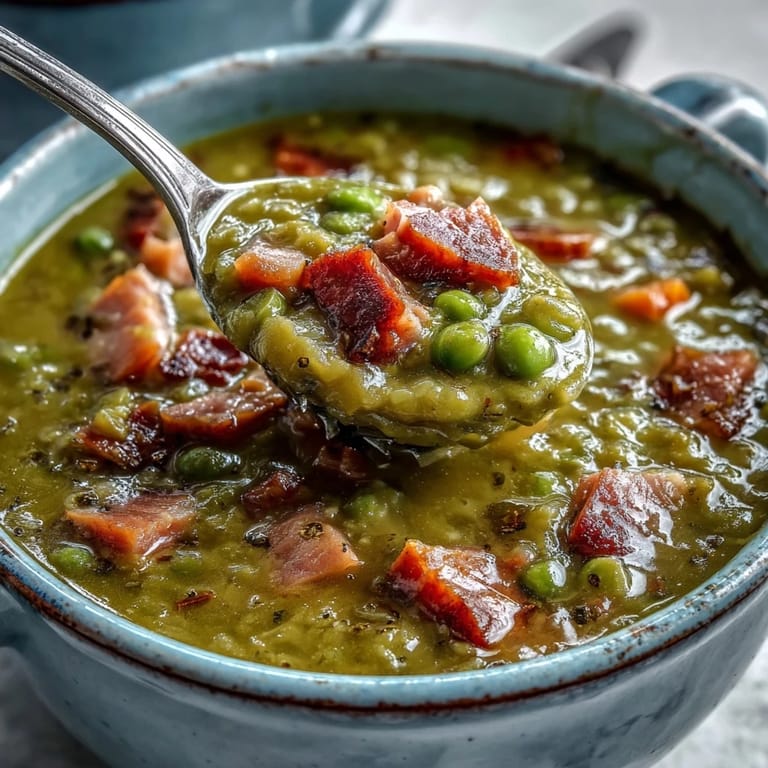
 My grandmother kept a ham bone in her freezer like it was liquid gold, and honestly, she was right. One particularly gray January afternoon, I found myself staring at that frozen bone she'd left me, remembering how she'd transform it into something that made the whole house smell warm and inviting. That's when I finally understood that split pea soup isn't just a recipe—it's the reason people say comfort food, because this pot simmering on the stove becomes the centerpiece of everything good about winter.
I made this for my neighbor last winter when she'd had surgery and couldn't cook for her kids. Watching her face when she tasted it—that exact moment when you realize food can be a language all its own—reminded me why this soup matters beyond just being dinner.
Ingredients
- Ham bone or diced cooked ham (1 meaty bone or 2 cups): This is where the soul of the soup lives; the bone releases collagen and flavor that broth alone can never match, and if you can't find one, quality leftover ham works beautifully too.
- Dried split peas (1 pound, rinsed and sorted): Rinse them well and pick through for any tiny stones—a trick I learned the hard way after a cracked tooth incident that was absolutely my own fault.
- Onion, carrots, and celery (1 large onion, 2 carrots, 2 stalks): This holy trinity of vegetables is what builds the foundation, so don't rush chopping them or skip this step.
- Garlic (2 cloves, minced): Added after the softer vegetables so it doesn't burn and turn bitter, which changes everything.
- Bay leaf (1): Just one—it's a whisper of flavor, not a shout, and you'll remove it before serving.
- Low-sodium broth (8 cups chicken or vegetable): The salt content matters here because you're seasoning to taste at the end, so using low-sodium gives you control.
- Water (2 cups): This dilutes the broth slightly and lets the peas become the star instead of being overpowered.
- Dried thyme (1 teaspoon): Earthy and subtle, it anchors all the other flavors without announcing itself.
- Black pepper and salt: Freshly ground pepper tastes incomparably better here, and salt gets added at the very end so you can taste as you go.
Tired of Takeout? 🥡
Get 10 meals you can make faster than delivery arrives. Seriously.
One email. No spam. Unsubscribe anytime.
Instructions
- Soften your base:
- Heat a splash of oil in your pot over medium heat, then add the diced onion, carrots, and celery. Stir them occasionally for about 5 to 6 minutes until they're soft and starting to turn golden at the edges; this is where the magic of flavor begins.
- Wake up the garlic:
- Add your minced garlic and cook for just 1 minute more until the whole kitchen smells like someone's about to make something delicious. Don't skip this moment or go longer, or it'll taste acrid.
- Build the soup:
- Stir in the split peas, your ham bone or ham, the bay leaf, thyme, broth, and water all at once. Give everything a good stir so nothing sticks to the bottom.
- Bring to life then settle in:
- Turn the heat up until you see a rolling boil, then immediately lower it to low, cover the pot, and let it bubble quietly for about 1 hour. Stir it once or twice, not obsessively, just enough to remember it's there.
- Let it thicken:
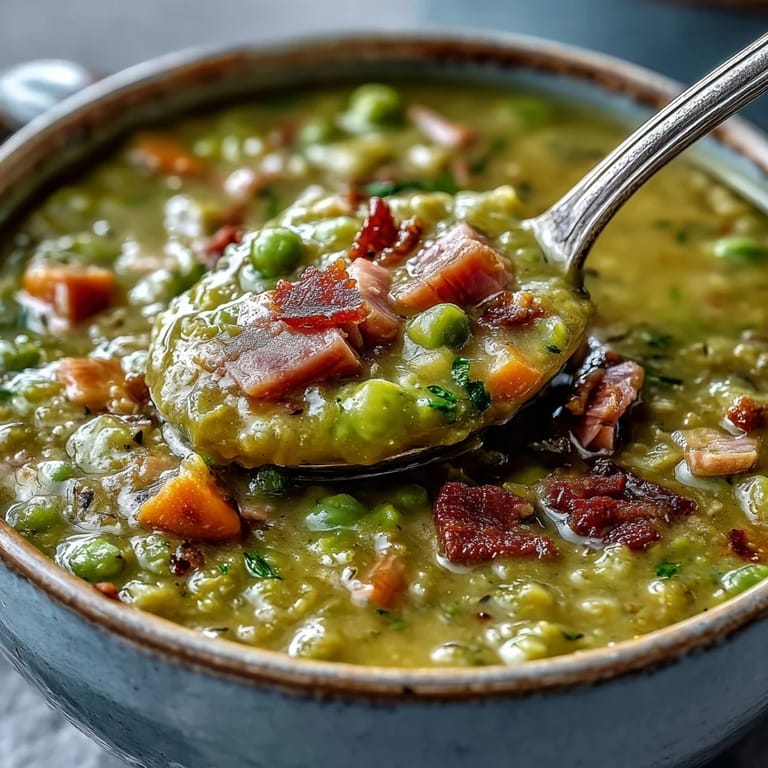
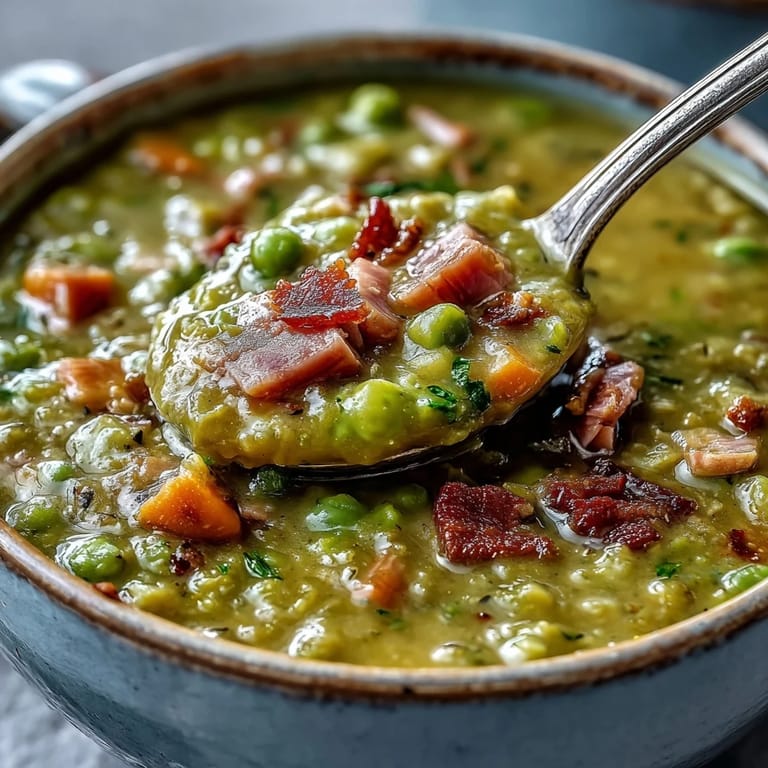
- Remove the lid and simmer for another 20 to 30 minutes until the peas are completely tender and start breaking down, and the whole thing looks thick and creamy. You'll know it's ready when a spoon dragged through it leaves a trail.
- Rescue the ham:
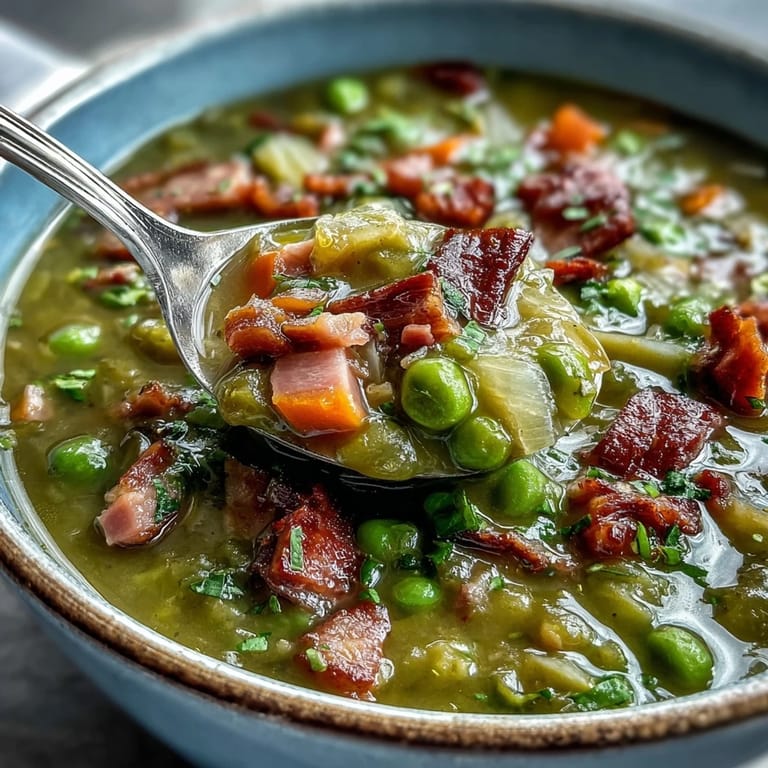
- Fish out the bay leaf and ham bone, then pick off any meat clinging to the bone, chop it, and return it to the pot. This step is worth the few extra minutes because you're reclaiming flavor.
- Choose your texture:
- You can leave it chunky, partially mash the peas with the back of a spoon for a rustic feel, or use an immersion blender for something silkier. Taste as you season with pepper and salt.
- Serve with intention:
- Ladle it into bowls and serve hot, maybe with a scatter of fresh herbs if you're feeling fancy or just as is if you're being honest.
 Pin It
  Pin It
 Years ago, a friend who grew up poor told me that split pea soup was the first thing her mother taught her to make because it stretched a dollar further than anything else. Cooking this soup now, I think about that—about how the most generous meals are often the simplest ones, and how something this humble can mean everything to someone.
Why This Soup Lasts
Split pea soup is one of those rare dishes that actually improves as it sits in your refrigerator, the flavors marrying and becoming more cohesive by the next day. The peas continue to soften slightly and thicken the broth even more, so if you make it on a Sunday, by Wednesday it tastes like you've been perfecting it all week. I've learned to always make extra for this exact reason.
Transforming Leftovers
If you find yourself with leftover soup that's gotten too thick, a splash of broth or water brings it back to life. Some people stir in cream for richness, others add a dollop of sour cream, and I've even seen someone turn it into a pie filling by baking it under a puff pastry crust. The point is that this soup is forgiving and versatile, ready to adapt to whatever you have on hand.
Variations Worth Trying
There's no single way to make this soup, which is part of why it's endured for generations. I've made it with smoked paprika instead of ham for friends who don't eat meat, and it's just as satisfying. Add diced potatoes for extra heartiness, throw in spinach at the very end, or use beef broth if that's what you have. The soup will tell you what it needs.
- For a vegetarian version, substitute the ham bone with a splash of liquid smoke and diced potatoes or mushrooms for earthiness.
- Frozen mirepoix (pre-cut vegetables) saves time if you're starting this soup after a long day.
- Store-bought ham broth or ham hock also works beautifully if you don't have a meaty bone on hand.
 Pin It
  Pin It
 This soup has a way of showing up exactly when people need it most, which is maybe the truest test of any recipe. Make it, share it, and watch how something so simple becomes a moment of grace on someone's ordinary Tuesday.
Recipe FAQs
- → Can I make this soup without a ham bone?
Yes, you can use 2 cups of diced cooked ham instead of a ham bone. The soup will still be flavorful and delicious, though a ham bone adds extra richness to the broth.
- → How do I store leftover split pea and ham soup?
Store leftovers in an airtight container in the refrigerator for up to 4 days. You can also freeze the soup for up to 3 months. Thaw overnight in the refrigerator before reheating.
- → Why is my soup too thick?
Split peas naturally thicken as they cook and absorb liquid. If your soup becomes too thick, simply add more broth or water while reheating and stir until you reach your desired consistency.
- → Can I make a vegetarian version of this soup?
Absolutely! Omit the ham and use vegetable broth instead of chicken broth. Add smoked paprika or liquid smoke for depth and smoky flavor that mimics the ham.
- → Do I need to soak split peas before cooking?
No, split peas do not require soaking before cooking. Simply rinse and sort them to remove any debris, then add them directly to the pot. They will cook perfectly in about 90 minutes.
- → What vegetables can I add to this soup?
You can add diced potatoes, parsnips, or turnips for extra heartiness. Add them along with the carrots and celery at the beginning so they have time to cook through and become tender.