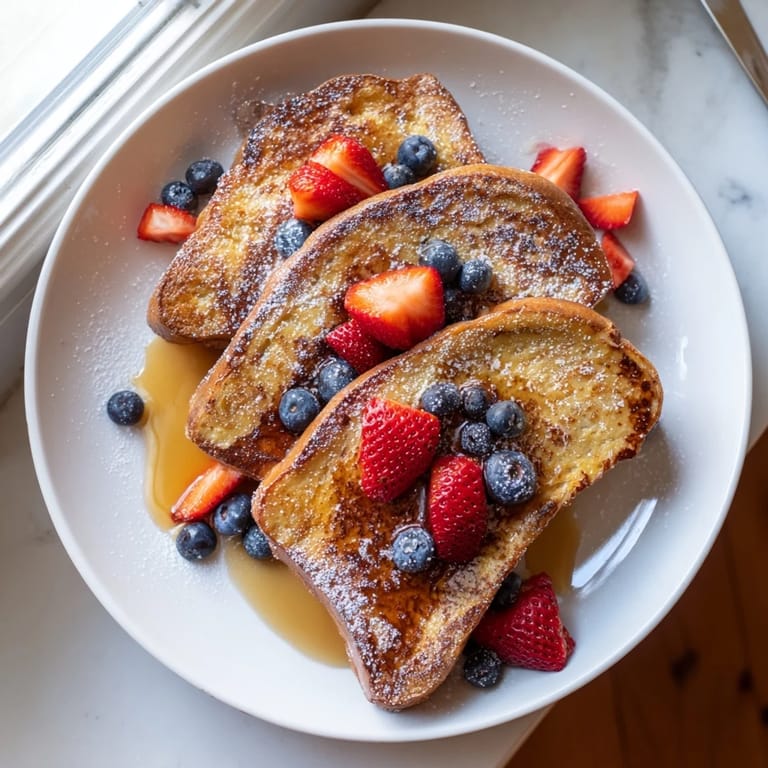
 Pin It
 My roommate Sarah used to make French toast every Sunday morning during college, and I'd wake up to the smell of vanilla and cinnamon drifting through our tiny apartment door. She swore by day-old bread from the local bakery down the street, always insisting it made the difference between soggy and sublime. I've carried that lesson with me for years, and she was right—there's something magical about how slightly stale bread transforms into this golden, custardy perfection.
Last winter, my kids woke up way too early on a snow day, and I decided to surprise them with French toast. They stood on chairs at the counter, taking turns dipping bread into the egg mixture and watching it sizzle in the pan. Now it's our snow day tradition, and honestly, I think they love the cooking part almost as much as eating it.
Ingredients
- 4 large eggs: The foundation of that perfect custard—room temperature eggs whisk up better
- 1 cup whole milk: Creates the creamy interior we're after, though you can use what you have
- 2 tbsp heavy cream: Totally optional but adds that restaurant-style richness
- 1 tbsp granulated sugar: Just enough to help the exterior caramelize beautifully
- 1 tsp pure vanilla extract: Don't skimp here—it's the flavor backbone
- 1/2 tsp ground cinnamon: Warm, comforting, and classic
- Pinch of salt: Balances the sweetness and wakes up all the flavors
- 8 slices day-old brioche or challah: Sturdy bread that soaks without falling apart
- 2 tbsp unsalted butter: For that golden, buttery crisp on the outside
Tired of Takeout? 🥡
Get 10 meals you can make faster than delivery arrives. Seriously.
One email. No spam. Unsubscribe anytime.
Instructions
- Whisk your custard base:
- In a large bowl, whisk together eggs, milk, cream, sugar, vanilla, cinnamon, and salt until completely smooth
- Get your pan ready:
- Heat a non-stick skillet over medium heat and add half the butter, letting it melt and foam slightly
- Dip and dont overthink it:
- Dip each bread slice into the custard for just 2-3 seconds per side—you want it soaked but not falling apart
- Cook to golden perfection:
- Fry for 2-3 minutes per side until deep golden brown and crisp, adding more butter as needed
- Keep them warm:
- Transfer finished pieces to a plate while you cook the rest, then serve immediately
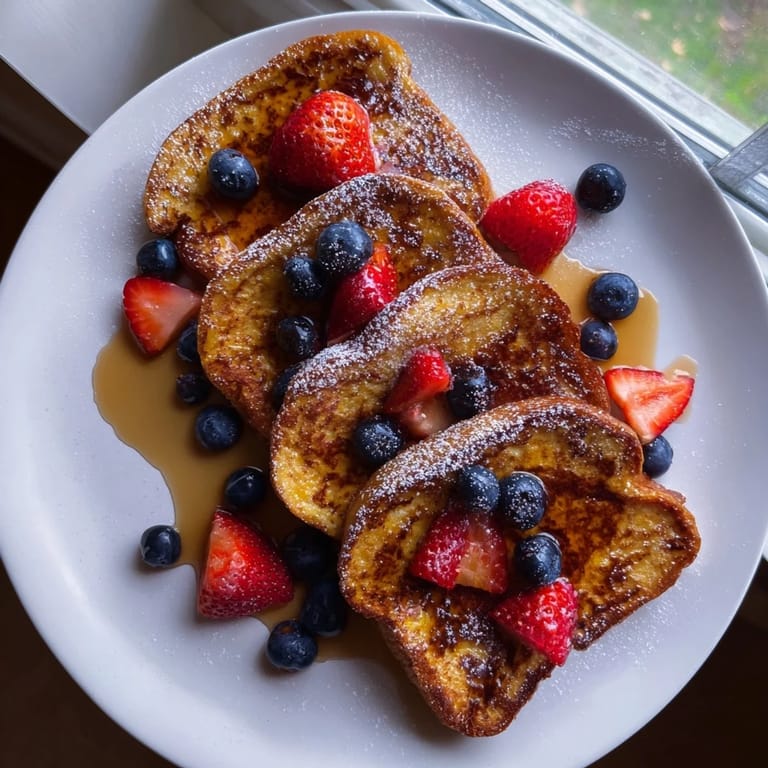 Pin It
 This recipe became my go-to when I hosted my first brunch for friends. I was so nervous about timing everything perfectly, but French toast saved me—it's forgiving, impressive, and everyone felt like they were eating at a cafe. Now it's the request I get most often.
Getting The Soak Time Right
The biggest mistake people make is either undersoaking or oversoaking the bread. You want that sweet spot where the bread has absorbed enough custard to become creamy throughout, but still holds its structure when you lift it. Watch for the bread to darken slightly as it saturates—that's your visual cue.
The Butter Technique
I've learned to add butter between batches rather than all at once. Fresh butter each time means every slice gets that fresh, golden crunch. And don't be shy with it—French toast is one of those dishes where butter quality really shines through.
Serving Ideas That Elevate Everything
Sometimes I'll spread a little cream cheese between two slices before dipping, creating stuffed French toast that feels positively decadent. Other times, I'll top it with warm berries that have been macerating in a little sugar. But honestly, pure maple syrup and a dusting of powdered sugar is pretty hard to beat.
- Real maple syrup makes all the difference
- Warm your plates if you can—it keeps everything hotter longer
- Fresh fruit cuts through the richness beautifully
 Pin It
 Whether it's a lazy weekend morning or a special occasion breakfast, this French toast hits the spot every single time. Enjoy every golden, custardy bite.
Recipe FAQs
- → What type of bread works best?
Day-old brioche, challah, or thick-cut white bread absorb the custard beautifully without becoming soggy. Slightly stale bread holds its structure during cooking while developing that perfect golden exterior.
- → How do I prevent soggy centers?
Dip each slice briefly, just a few seconds per side. The bread should feel saturated but not heavy. Avoid oversoaking, and cook over medium heat to ensure the custard sets while the exterior crisps.
- → Can I make this dairy-free?
Substitute whole milk with almond, oat, or soy milk and use plant-based butter or coconut oil for cooking. The texture remains creamy and satisfying without any dairy products.
- → What's the purpose of heavy cream?
Heavy cream adds extra richness and creates a silkier custard. It's entirely optional—the version with just milk produces perfectly wonderful results that many traditional home cooks prefer.
- → How do I keep finished slices warm?
Place cooked slices on a baking sheet in a 200°F oven while preparing remaining batches. This maintains warmth without continuing to cook, ensuring all servings arrive at the table equally hot and ready for toppings.
- → Can I add mix-ins to the custard?
Orange zest, almond extract, or a splash of vanilla liqueur enhance the flavor profile. Cinnamon or nutmeg adds warmth. These additions infuse directly into the custard for subtle, sophisticated variations.