 Pin It
 There's a moment in every cook's life when they realize that patience is the secret ingredient, and Dutch oven French onion soup taught me that lesson while I stood at my stove on a gray afternoon, watching golden caramel build slowly from what looked like a pile of ordinary onions. My kitchen filled with that deep, nutty sweetness, and I couldn't stop stirring because I knew something magical was happening. By the time those first sips touched my lips, I understood why this simple peasant soup had become a French standard, why it showed up on bistro menus across Paris, and why it would become my go-to when someone needed real comfort.
I made this soup for my sister's first week in her new apartment, when her kitchen was still mostly cardboard boxes and dreams. We sat on her floor eating from mismatched bowls, and she closed her eyes after the first spoonful, and that's when I knew the recipe was working exactly as it should. The soup had transformed an empty space into a home, at least for that evening, and that's the power of something made with intention and time.
Ingredients
- Five large yellow onions, thinly sliced: Yellow onions have the right balance of natural sugar and mild flavor for caramelizing without bitterness, so don't substitute with red or white varieties if you want the classic taste.
- Three tablespoons unsalted butter and two tablespoons olive oil: The combination gives you the butter's richness and the olive oil's smoke point, so the onions caramelize rather than burn.
- Two garlic cloves, minced: A small amount adds gentle backbone without overpowering the onions that are the true star.
- One teaspoon sugar: This nudges the caramelization forward and deepens the natural sweetness already present in the onions.
- Eight cups beef broth: Rich, beefy broth is traditional, though vegetable broth works beautifully for a meatless version and actually lets the onion flavors shine brighter.
- Half cup dry white wine: Choose something you'd drink, not cooking wine, because the flavor concentrates as it reduces and becomes part of the soul of the soup.
- Two teaspoons fresh thyme leaves or one teaspoon dried: Fresh thyme adds a bright herbal note, but dried works reliably in a pinch.
- Two bay leaves: These infuse the broth with subtle depth and must be removed before serving.
- One tablespoon Worcestershire sauce: This brings umami and a subtle tanginess that rounds out all the other flavors beautifully.
- One baguette, sliced into half-inch rounds: Crusty bread holds its structure under the hot broth and broiler, becoming almost like a crispy edible spoon.
- Two cups Gruyère cheese, grated: Gruyère melts smoothly and develops a nutty flavor when broiled, which is exactly what you want here.
- Half cup Parmesan cheese, grated: This is optional but adds a sharp, salty edge that some cooks swear deepens the whole experience.
Tired of Takeout? 🥡
Get 10 meals you can make faster than delivery arrives. Seriously.
One email. No spam. Unsubscribe anytime.
Instructions
- Melt your fat and gather your onions:
- In your Dutch oven over medium heat, let the butter and olive oil mingle together until the butter stops foaming and the whole pan smells warm and inviting. Add your sliced onions and that small spoonful of sugar, then settle in because this is where patience lives.
- Caramelize with intention:
- Stir your onions frequently over the next 40 to 45 minutes, watching as they soften from raw slices into a deep golden mass that smells like a French bistro. You'll notice the color shift from pale to light tan to deeper amber, and each stage tastes different, so let them go all the way to that deep caramel place.
- Wake up the garlic:
- Once your onions look like melted gold, add the minced garlic and let it cook for just one minute, stirring so it wakes up but doesn't brown.
- Deglaze with wine:
- Pour in your white wine while scraping your spoon across the bottom of the pot, coaxing up all those flavorful brown bits that stick to the pan. Let it bubble gently for a few minutes until the wine smells less raw and more integrated into the whole thing.
- Build your broth foundation:
- Add the beef broth, thyme, bay leaves, and Worcestershire sauce, then bring everything to a gentle simmer. Reduce the heat and let it cook uncovered for 20 to 30 minutes so the flavors can really get to know each other.
- Toast your bread shields:
- While the soup simmers away, preheat your oven's broiler and arrange your baguette slices on a baking sheet. Toast them until they're golden and crispy on both sides, watching carefully because they go from golden to burnt in about two minutes.
- Season and taste:
- Remove the bay leaves and taste your soup, adding salt and pepper until it tastes rich and complete, remembering that you'll add salty cheese on top so don't overdo it now.
- Assemble your bowls:
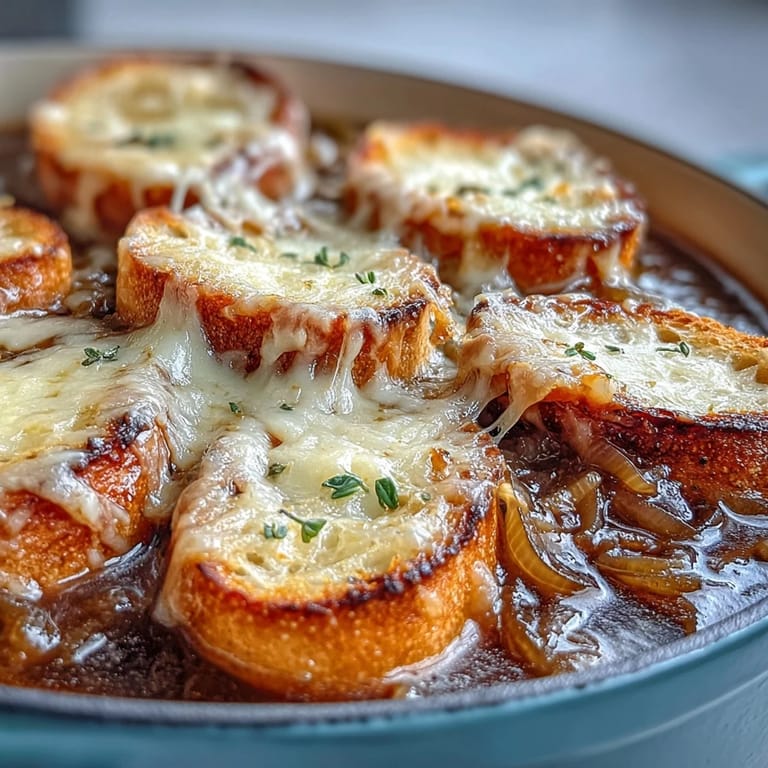
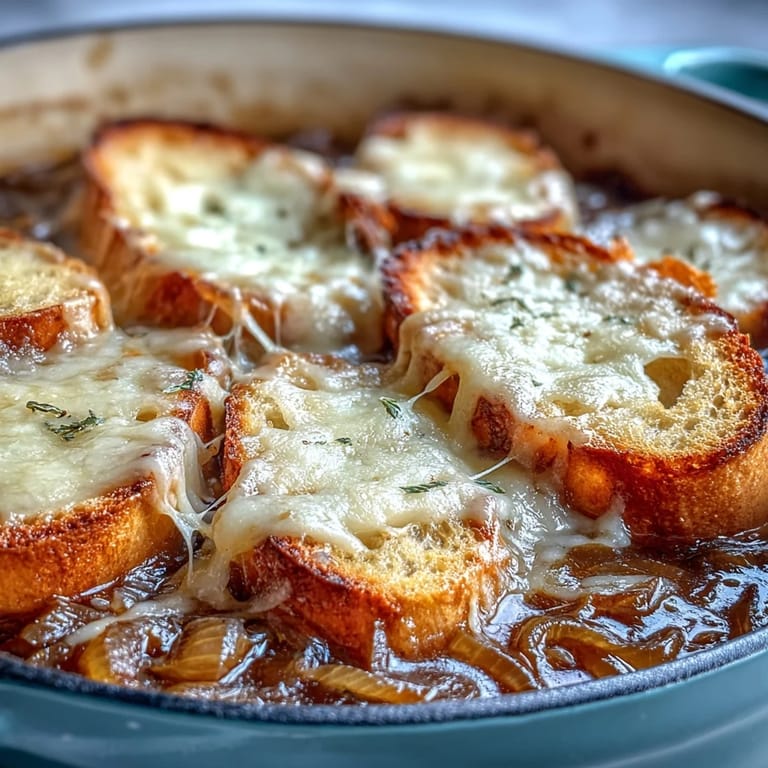
- Ladle your soup into oven-safe bowls, top each with a toasted baguette slice, then pile on a generous handful of Gruyère and a little Parmesan if you're using it.
- Final broil and serve:
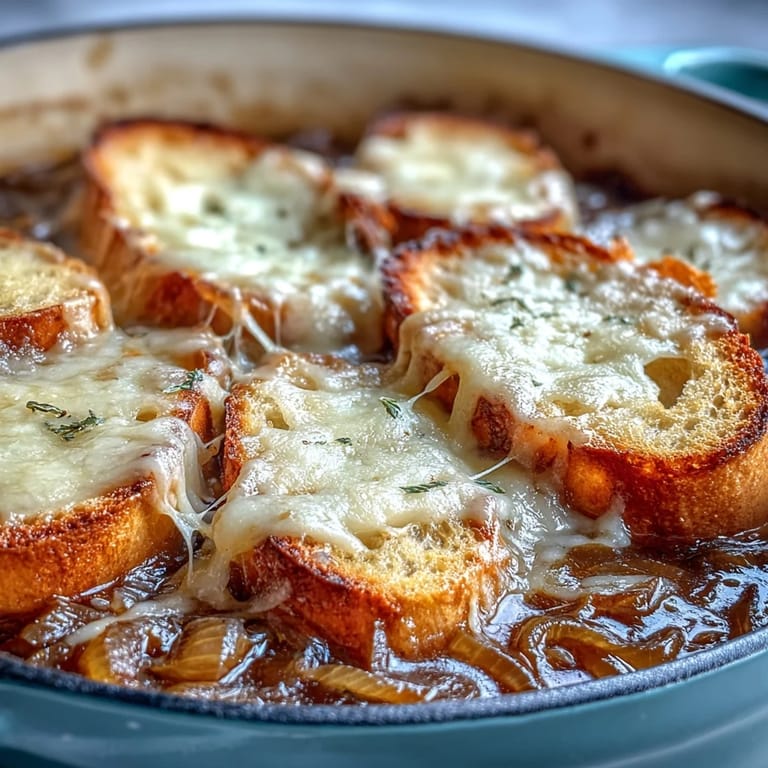
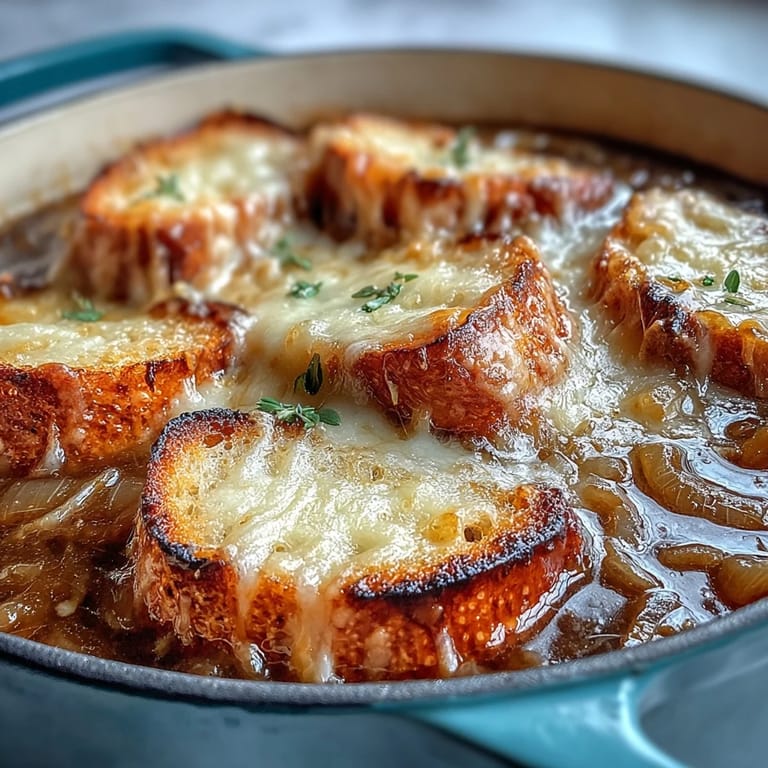
- Place your bowls on a baking sheet and broil until the cheese melts into a bubbly, slightly golden layer, which takes about 2 to 4 minutes. Serve immediately while everything is hot and the cheese is still pulling and stretching with each spoonful.
 Pin It
  Pin It
 Years later, I made this soup on a Sunday evening when grief needed feeding, and I remembered that caramelizing onions teaches you something about transformation, about how time and heat and patience turn something ordinary into something that nourishes. That's when cooking stops being about recipes and starts being about staying present with what your hands are doing.
The Art of Caramelization
Caramelizing onions isn't a trick or a secret, it's just chemistry and attention. Those sliced onions contain natural sugars that slowly break down and brown as they release their moisture, which happens best at medium heat in a good heavy pot that distributes heat evenly. I learned early on that the stirring matters because it prevents the bottom from charring while the top stays pale, and that wooden spoon becomes almost meditative as you move it through the pot every couple of minutes. The color progression tells you exactly where you are, and somewhere around 30 minutes you'll start to smell that deep, nutty sweetness that tells you you're on the right track.
Building Depth in the Broth
After the onions reach their caramel stage, the wine does important work by adding acidity and slight tannin that brightens everything that comes after. When you scrape up those brown bits stuck to the bottom, you're actually collecting concentrated flavor that would otherwise be wasted, and this technique called deglazing is one of those kitchen moves that feels fancy but is really just being efficient. The beef broth becomes the canvas, and the thyme and bay leaves are the subtle brushstrokes, while that Worcestershire sauce acts like a salt amplifier without actually adding salt, bringing everything into sharper focus.
Mastering the Cheese Toast
The baguette slice is your delivery system, the thing that holds soup and cheese together in each spoonful, so it needs to be toasted enough to stay firm but not so hard that it's like eating cardboard. Broilers are unpredictable little machines, so watch your bread carefully the first time because your broiler might be hotter or cooler than someone else's, and timing is everything in that last step. Once the cheese goes on top, you want just enough heat to melt it and create little bubbles and maybe some brown spots, but not so much that it separates or turns grainy, which usually takes 2 to 4 minutes depending on how much cheese you piled on.
- Always use a baking sheet under your bowls: It catches any drips and makes it easier to safely move them in and out of the broiler.
- Shred your cheese fresh right before assembling: Pre-shredded cheese has anti-caking agents that make it melt less smoothly than freshly grated.
- Let the broiled bowls rest for about 30 seconds: The cheese and bread stay hot enough to burn your mouth if you dig in immediately, and that tiny pause lets everything set slightly.
 Pin It
  Pin It
 This soup arrives at the table steaming and golden, the cheese stretched between the spoon and the bowl, and in that moment you understand why it's survived centuries of cooking. It's simple enough for any home cook, elegant enough for company, and it tastes like you cared enough to spend time making it right.
Recipe FAQs
- → How long does it take to properly caramelize the onions?
Plan for 40-45 minutes of stirring and cooking over medium heat. The onions should become deeply golden and soft, developing rich, sweet flavors essential to authentic French onion soup.
- → Can I make this soup vegetarian?
Yes, simply substitute vegetable broth for beef broth and use a vegetarian Worcestershire sauce or omit it entirely. The caramelized onions provide plenty of depth and umami flavor.
- → What cheese works best if I can't find Gruyère?
Swiss or Emmental cheese are excellent alternatives with similar melting properties and nutty flavor profiles. Comté also works beautifully for a traditional French touch.
- → Do I need oven-safe bowls for this dish?
Yes, oven-safe bowls are essential for broiling the cheese topping directly on the soup. Look for ceramic or stoneware crocks that can withstand high broiler heat.
- → Can I prepare the soup base ahead of time?
Absolutely. The soup base can be made 2-3 days in advance and refrigerated. Simply reheat, ladle into bowls, add bread and cheese, then broil just before serving.
- → Why add sugar to the onions when cooking?
A small amount of sugar helps jumpstart the caramelization process, encouraging the onions to develop their characteristic golden color and sweet, complex flavor more efficiently.