 Pin It
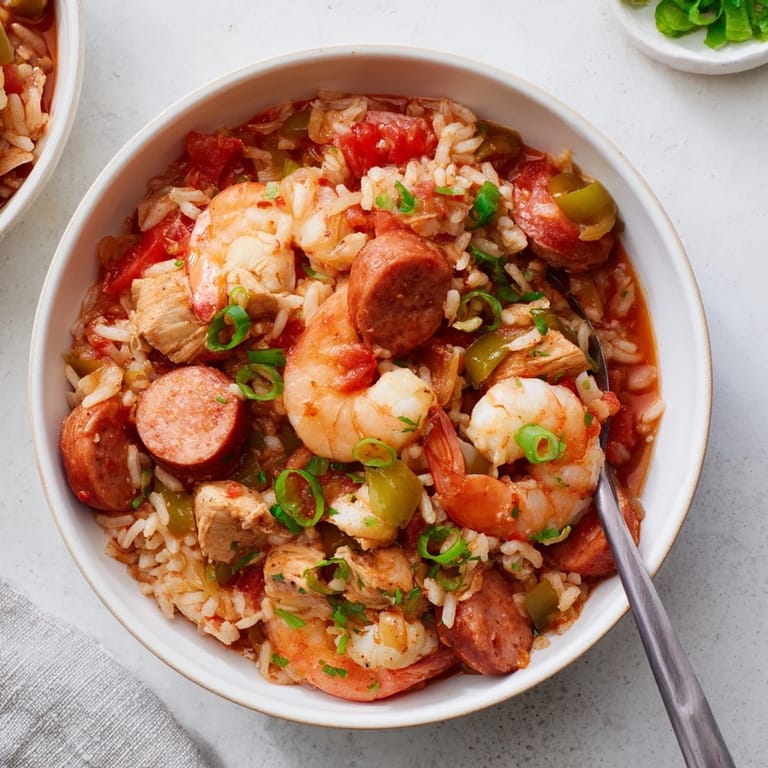
 My tiny apartment kitchen smelled like a New Orleans street corner the first time I made jambalaya. I'd invited friends over on a rainy Tuesday, armed with a recipe from a coworker's grandmother and far more confidence than cooking skill. The pot hissed and popped, building layers of flavor that filled every corner of the room. By the time we sat down, steam rising in ribbons from our bowls, I knew this wasn't just dinner it was a celebration.
Last winter, my sister called me at midnight, stressed about hosting a dinner party for twelve. I told her to make jambalaya. She'd never cooked Cajun food before, but something about the rhythm of chopping vegetables and adding ingredients in layers calmed her down. When I arrived, the house smelled incredible, and she was standing over the pot with this proud quiet smile. That's the kind of dish this is.
Ingredients
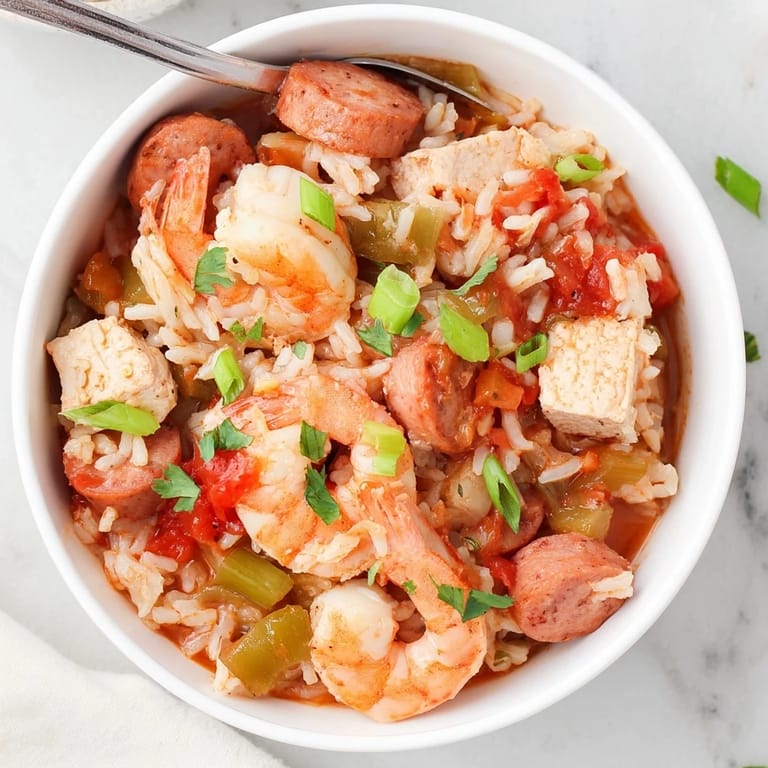
- Andouille sausage: This smoky Cajun sausage is non-negotiable for authentic flavor, but smoked kielbasa works in a pinch
- Chicken thighs: Stay tender during long cooking and add richness to the broth
- Shrimp: Add them at the end so they stay succulent and don't turn rubbery
- The holy trinity: Onion, bell pepper, and celery are the foundation of Creole cooking
- Long-grain white rice: Rinsing it first prevents gummy results and helps each grain stay separate
- Smoked paprika: Provides that signature deep red color and subtle campfire aroma
- Cayenne pepper: Adjust this based on your heat tolerance, but don't skip it entirely
- Bay leaves: Their piney, floral note ties everything together
Tired of Takeout? 🥡
Get 10 meals you can make faster than delivery arrives. Seriously.
One email. No spam. Unsubscribe anytime.
Instructions
- Sear the sausage first:
- Crisping the andouille in hot oil renders its fat and creates fond (those browned bits) at the bottom of your pot
- Brown the chicken:
- Season the pieces generously and let them develop a golden crust on all sides before removing them
- Build your base:
- Cook the vegetables until they're soft and fragrant, then add garlic so it doesn't burn
- Toast the spices:
- Stirring the seasonings with the rice for a minute wakes up their oils and intensifies the flavor
- Add your liquids:
- Pour in the tomatoes and broth, scraping up all those flavorful bits from the bottom as it bubbles
- Simmer together:
- Return the meats to the pot, cover tightly, and let the rice slowly absorb all that liquid
- Add the shrimp:
- Gently press them into the rice so they steam in the residual heat without overcooking
- Finish with freshness:
- Scatter spring onions and parsley over the top for color and a bright contrast to the rich spices
 Pin It
 There's something deeply satisfying about a dish that demands patience. My grandfather used to say that good food can't be rushed, and jambalaya proves him right every time. The way the aromas develop from sharp and raw to deep and comforting feels like magic.
Making It Your Own
I've made this recipe with what I had on hand more times than I can count. The proportions stay the same, but the soul of the dish remains. That's the beauty of Creole cooking it's adaptable, forgiving, and always rewarding.
Serving Suggestions
Cornbread is the classic accompaniment, its sweetness balancing the heat. A simple green salad with a sharp vinaigrette cuts through the richness. And don't forget cold beer or sweet tea on the side.
Storage And Reheating
Jambalaya keeps beautifully in the refrigerator for up to four days. The flavors actually meld and improve overnight. Reheat gently with a splash of broth to bring the rice back to life.
- Freeze individual portions for easy weeknight meals
- Add a splash of water when reheating to prevent drying
- Let it come to room temperature before storing to maintain texture
 Pin It
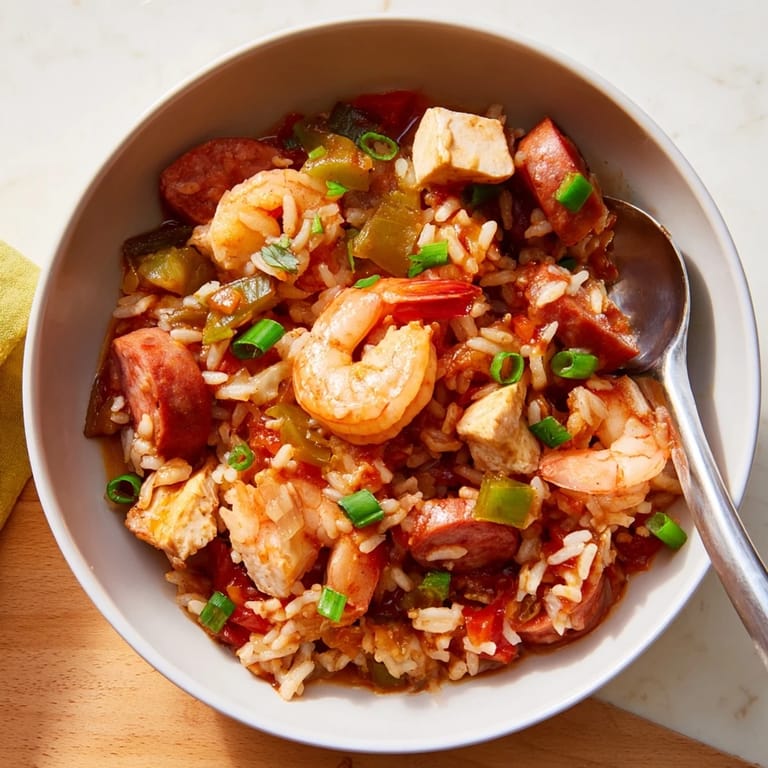
 Serve it steaming hot, with plenty of napkins nearby and good conversation around the table. That's what jambalaya is really about.
Recipe FAQs
- → What makes authentic Creole jambalaya different from Cajun style?
Creole jambalaya includes tomatoes, giving it a reddish color and slightly sweeter profile, while Cajun style omit tomatoes for a browner, more rustic appearance. This version follows the Creole tradition with canned diced tomatoes providing both moisture and depth.
- → Can I prepare this dish ahead of time?
Absolutely. Jambalaya actually develops deeper flavors when reheated. Prepare everything up to step 7, refrigerate for up to 2 days, then reheat gently on the stove with a splash of broth to refresh the rice texture. Add fresh garnishes before serving.
- → What's the best rice for jambalaya?
Long-grain white rice works best because it stays separate and fluffy during cooking. Avoid short-grain or Arborio rice, which becomes too creamy. Rinse the rice thoroughly before adding to remove excess starch and prevent gumminess.
- → How can I adjust the spice level?
Start with the recommended cayenne amount, then add more gradually if you prefer more heat. You can also serve with hot sauce on the side, letting everyone customize their portion. For a milder version, reduce cayenne to ½ teaspoon and use mild sausage.
- → What proteins work best in jambalaya?
The traditional trio includes andouille sausage, chicken thighs, and shrimp, but you can customize based on preference. Andouille adds essential smoky depth, but smoked kielbasa or chorizo make excellent substitutes. Chicken thighs stay moist during simmering, while shrimp cooks quickly and adds sweetness.
- → Why is my jambalaya rice still crunchy?
If the rice is undercooked but the liquid has absorbed, add ¼ cup more broth, cover, and simmer for 5-10 minutes more. Avoid lifting the lid too frequently, as this releases steam needed for proper cooking. The rice should be tender but still maintain individual grains.