 Pin It
 Last spring, I was rushing to put together something for a last-minute gathering, and I realized the most impressive thing I could offer wasn't baked or braised—it was just vegetables arranged thoughtfully on a board with a silky herb dip. My neighbor had mentioned how tired she was of heavy appetizers, and watching her face light up when she saw those jewel-toned radishes and snap peas made me understand that sometimes elegance is simply about starting with the best ingredients and letting them shine. That afternoon taught me that the simplest recipes often create the most memorable moments.
I made this board for my daughter's art class potluck, and something unexpected happened—the kids who usually bypassed vegetables entirely kept circling back to it. One girl asked if the radishes were "supposed to taste peppery like that," and I realized she'd never had a truly fresh radish before. Watching that moment unfold, I understood that a well-arranged board isn't just pretty; it's an invitation to try things you might otherwise pass by.
Ingredients
- Breakfast radishes: Choose ones with thin skins and a firm snap—they should feel almost crisp when you hold them, and trimming them in half keeps them elegant without overwhelming the palate.
- Sugar snap peas: These are the ones you can eat whole, and I trim just the string that runs along the seam so each bite is tender.
- Fresh or frozen peas: If using fresh, a quick blanch in boiling salted water keeps them bright green and slightly sweet.
- Baby carrots: Look for ones roughly the same size so they cook evenly and feel intentional on the board.
- Cherry tomatoes: Halving them prevents them from rolling and shows off their jeweled interior.
- Cucumber slices: I peel mine in alternating strips so they look striped and feel less heavy than solid green.
- Greek yogurt: The tanginess here is everything—it balances the richness of the mayo and makes the dip taste bright rather than heavy.
- Mayonnaise: Just enough to give the dip body and emulsify all those delicate herbs into something that coats your vegetable perfectly.
- Fresh lemon juice: Never skip this; it's what stops the dip from tasting flat and makes people wonder what your secret is.
- Fresh chives, parsley, and dill: These three together create a flavor that feels sophisticated without being fussy—I've learned that using them fresh rather than dried makes all the difference.
- Garlic: Just one small clove minced fine, because the goal is a whisper, not a shout.
Tired of Takeout? 🥡
Get 10 meals you can make faster than delivery arrives. Seriously.
One email. No spam. Unsubscribe anytime.
Instructions
- Wash and prep your vegetables with intention:
- Rinse each item under cold water and pat dry so nothing slides around on your board. The drier they are, the crisper they'll stay, and dryness also means they won't dilute your dip.
- Arrange with rhythm and color balance:
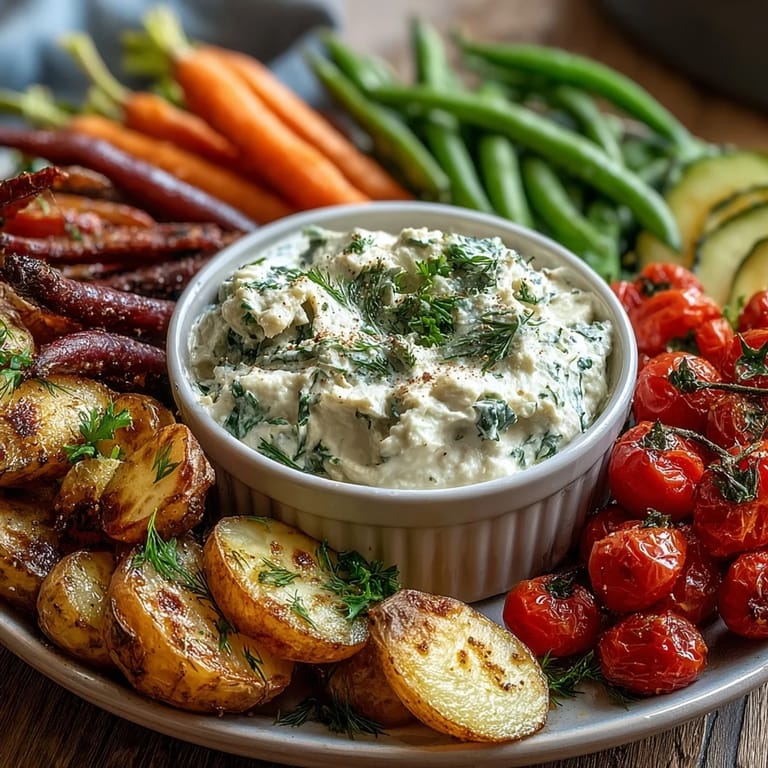
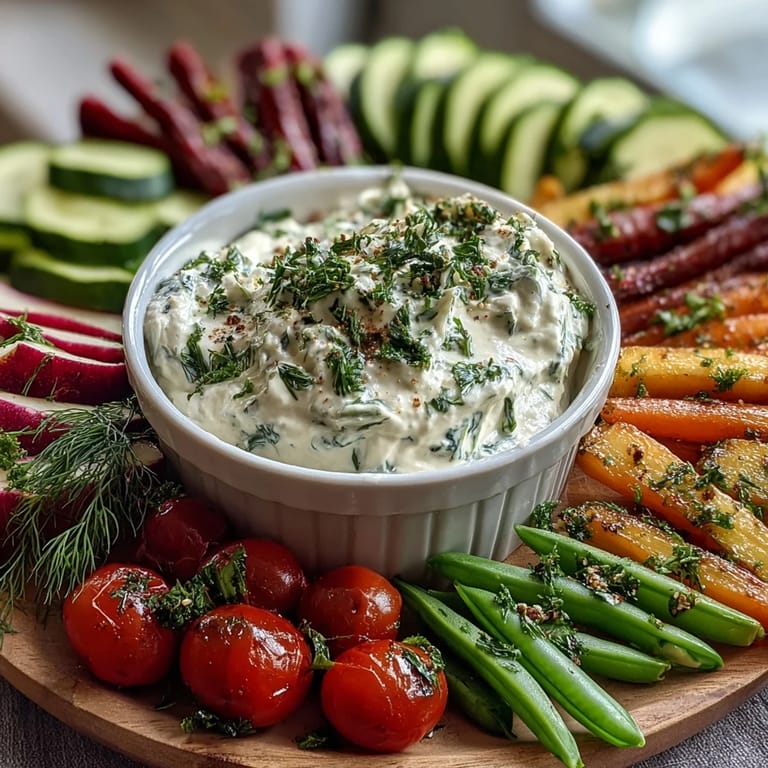
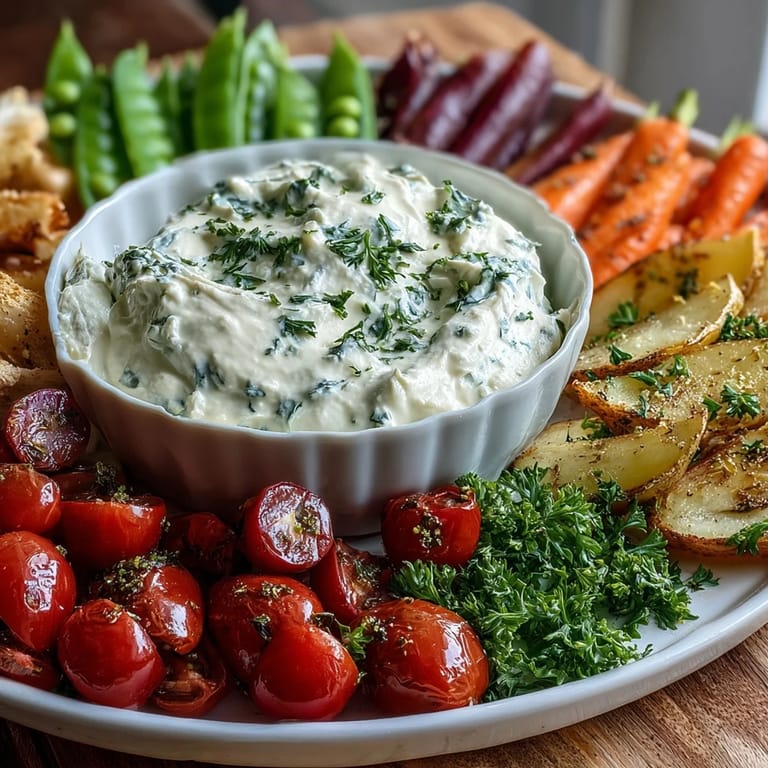
- Start by placing your dip bowl in the center, then build outward in small clusters—all the radishes together, then peas, then carrots. This makes the board feel curated rather than random, and it's easier for guests to navigate.
- Make your herb dip silky and welcoming:
- Whisk the yogurt, mayo, and lemon juice together first until smooth, then fold in your chopped herbs gently so they don't bruise. The folding motion keeps them vibrant green rather than crushed and dark.
- Taste and adjust before it meets the world:
- A pinch more salt, a squeeze more lemon—this moment matters because the dip should taste bright enough that it makes you pause. I always taste on a vegetable, not a spoon, so I understand how everything works together.
- Dress the board with those finishing touches:
- Scatter microgreens if you're using them, sprinkle feta in a few strategic spots, and nestle crackers around the edge. These small details signal that you cared about how it looks, which somehow makes people enjoy it more.
- Serve it the moment you're ready:
- This board is best eaten within an hour of assembly while everything is at its crispest and the dip is still cold.
 Pin It
 There was a quiet moment during that gathering when everyone had stopped talking and was just eating, and I realized this simple board had created the kind of ease that allows people to relax. Sometimes the best thing a recipe can do isn't impress—it's help others feel comfortable and cared for, and this one does both.
Why Spring Vegetables Matter
Spring vegetables carry a brightness that winter just can't match, and it's partly because they're grown to be eaten fresh and raw. Radishes especially have a peppery snap that reminds you of the season itself, and when you buy them from farmers or pick them at peak season, that quality is impossible to ignore. I've learned that the board is only as good as the vegetables it showcases, so choosing the freshest option available becomes your secret advantage.
The Herb Dip Philosophy
I used to think herb dips needed to be complicated, until I realized that simplicity was the entire point. Fresh herbs, yogurt, lemon—these three things together create something that tastes restaurant-quality because there's nothing to hide behind. The trick I've discovered is using roughly equal parts of each herb so no single flavor dominates, and tasting as you go so you catch the moment when it shifts from good to perfect.
Board Building and Presentation
A good board tells a story through color and texture, and I've learned that planning it out in your head before you arrange saves both time and regret. The reds of tomatoes and radishes pop against the greens of peas and herbs, and clustering similar vegetables together creates visual clarity rather than chaos. Group your elements intentionally, think about height and dimension, and remember that the dip is your anchor point—everything else radiates outward from there.
- Arrange vegetables in small piles rather than scattering them randomly, which makes it feel intentional and makes guests feel guided toward what to try first.
- Leave some negative space on the board so it doesn't feel crowded; white board showing through reads as elegant, not incomplete.
- Taste a vegetable from each pile before serving just to confirm everything is at its peak flavor and crispness.
 Pin It
 What started as a practical solution to a last-minute gathering has become something I make whenever I want to feed people without fussing. It's proof that sometimes the most meaningful recipes are the ones that let quality ingredients do the talking.
Recipe FAQs
- → Can I make this board vegan?
Yes, substitute the Greek yogurt with a plant-based alternative and use vegan mayonnaise to keep the dip creamy and flavorful.
- → What are good seasonal vegetable additions?
Asparagus tips, blanched green beans, or sliced bell peppers can add more variety and color to the board.
- → How far in advance can I prepare the dip?
The herb dip can be made ahead and refrigerated for up to two days without losing its fresh flavor.
- → What type of board works best for serving?
A large serving board or platter is ideal for arranging the vegetables and dip attractively for easy serving.
- → Are there any common allergens in this dish?
This platter contains dairy from yogurt, mayonnaise, and optional feta cheese. If served with bread or crackers, gluten presence should be considered.