 Pin It
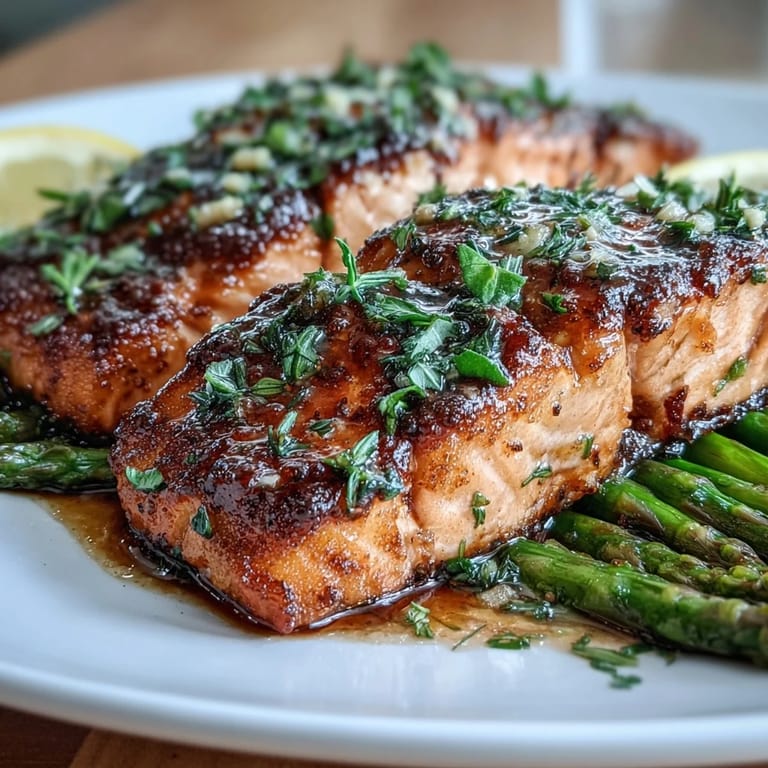
 The snap and sizzle of salmon hitting a hot skillet always transforms the kitchen into a springtime haven in my memory. One evening, as the daylight lingered a little longer, I found myself reaching for bright asparagus and lemon, eager to recreate a restaurant meal I'd admired for its simplicity. The aroma of garlic bubbling in butter is alone enough to coax smiles from anyone wandering in. I never quite expected how a single lemon slice on the salmon would turn the sauce into something so lively. Cooking this dish felt like inviting a breath of fresh air into my weeknight routine.
I once churned out these salmon fillets for a small group of friends on a soft April evening—the asparagus was still dewy with local market freshness. One friend couldn't stop dunking asparagus spears into the sauce, and I remember laughing at how quickly the plate became an impromptu centerpiece. The lively conversation always quieted when someone took a bite, just for a second. That moment taught me that even a quick meal can be the highlight of a gathering. Somehow, the fresh parsley scattered at the last minute felt like confetti for our tiny celebration.
Ingredients
- Salmon fillets: Fresh, firm fillets hold up best in the pan—drying them thoroughly helps create that crisp, golden crust.
- Asparagus: Snapping off the woody ends is oddly satisfying, and thinner stalks cook more evenly alongside the salmon.
- Lemon: I found out that thin slices let the citrusy aroma infuse rather than overpower the sauce.
- Unsalted butter: Using unsalted allows you to control the salt level, and melting it slowly with garlic fills the kitchen with irresistible warmth.
- Olive oil: A splash keeps the butter from browning too fast and adds a subtle fruity note.
- Garlic: Mincing finely lets the garlic toast without burning, which makes the difference in flavor.
- Thyme leaves: Fresh thyme is vibrant, but dried works in a pinch; either brings wonderful earthy undertones.
- Salt: Season both sides of the salmon generously—don't be shy, as it really brings out the flavors.
- Black pepper: A little goes a long way for a gentle heat that complements the fish.
- Fresh parsley: This garnish not only brightens up the plate but adds a garden-fresh finish to the dish.
Tired of Takeout? 🥡
Get 10 meals you can make faster than delivery arrives. Seriously.
One email. No spam. Unsubscribe anytime.
Instructions
- Prepping the salmon:
- Pat each fillet dry with a towel and sprinkle salt and pepper on both sides—feel the coarse grains as you season, like prepping for a show.
- Sautéing the asparagus:
- Heat the skillet, drizzle in olive oil, and toss the asparagus gently until it's just tender, vivid green, and still crisp—listen for the popping sounds as it cooks.
- Cooking salmon fillets:
- Add olive oil and a knob of butter, then cook the fillets skin-side down (if using); as the salmon turns golden and a crisp crust forms, you'll smell the fish getting sweeter.
- Building the garlic butter sauce:
- Add garlic, thyme, and the rest of the butter—let it bubble for thirty seconds until the kitchen fills with the scent of toasted garlic and herbs.
- Finishing touches:
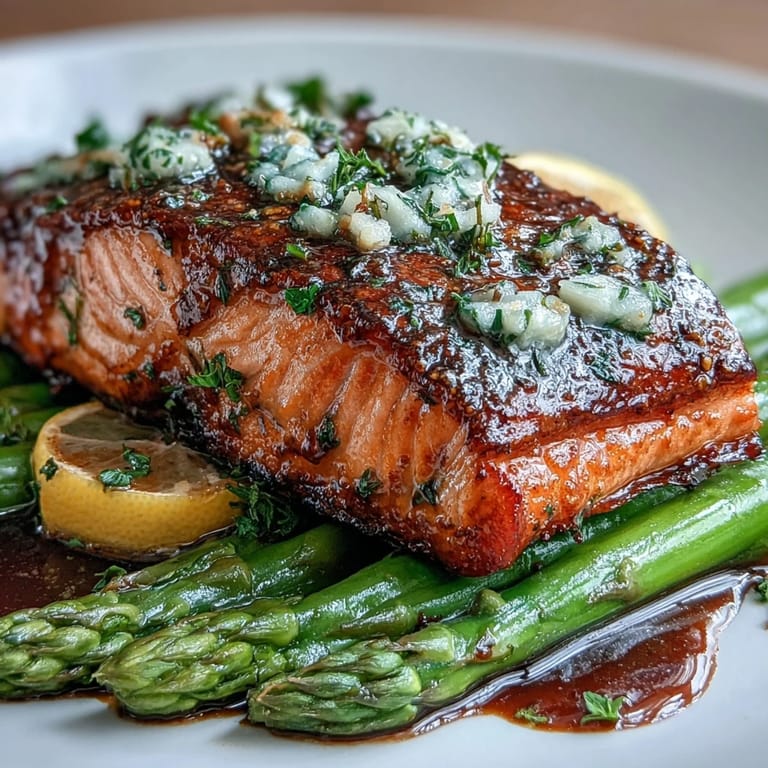
- Return asparagus and add lemon slices, gently toss everything so the garlic butter coats each piece; sprinkle parsley over the top before serving for a fresh, vibrant finish.
 Pin It
 The night I paired the salmon with a chilled Chardonnay, laughter echoed louder than the clinking glasses. It was in those moments, with lemony garlic mist drifting through the dining room, that supper felt more like a joyful ritual than a chore. The dish seemed to spark stories, smiles, and a memory that outlived the meal itself.
Swapping Sides and Sauces
Sometimes, the asparagus just isn’t at its peak, so I swap in green beans or broccolini—both soak up the sauce beautifully. If you’re feeling adventurous, a splash of white wine in the pan amps up the aroma and gives the sauce a silky finish. Roasted potatoes on the side make it heartier without overpowering the delicate flavors of the salmon.
Small Tweaks, Big Flavor
A pinch more thyme or parsley can completely change the flavor profile—I've learned to taste as I go and adjust for more brightness or depth. Using fresh herbs from the garden amplifies the dish, but dried work well when you're pressed for time. Mind the butter: if you only use olive oil, the sauce loses its richness, but with both, every bite becomes luscious.
Mastering the Salmon Sear
Getting a perfect sear takes patience, so crank up the heat but don’t crowd the fillets in the pan. If the fish sticks, let it loosen up on its own—don’t nudge it before it’s ready. Cleaning the skillet between batches keeps butter from burning and makes the next round taste just as fresh.
- Warm your serving plates so your salmon stays hot.
- Slice lemon extra thin for gentle citrus flavor.
- Have extra parsley ready in case someone asks.
 Pin It
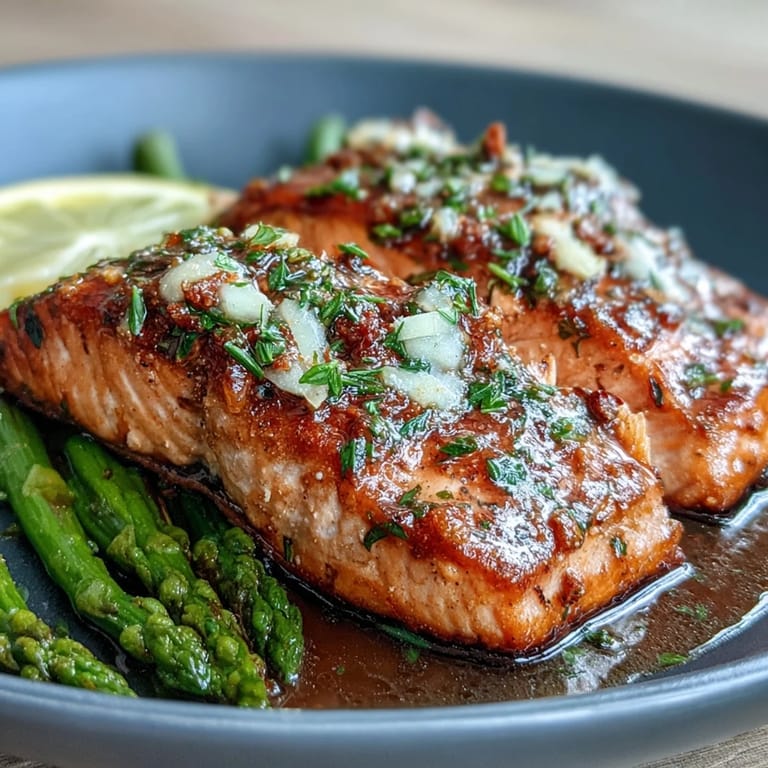
 The best spring dinners are the ones that leave you lingering at the table, still savoring the last bite. I hope this garlic butter salmon delivers those moments to your kitchen too.
Recipe FAQs
- → What’s the best way to cook salmon for a crisp finish?
Pan-searing salmon in a hot skillet with olive oil helps create a crisp golden crust while keeping the inside tender.
- → Can I replace asparagus in this dish?
Substitute asparagus with green beans or broccolini for a similar fresh texture and flavor.
- → How can I boost the garlic aroma in the sauce?
Use freshly minced garlic and briefly sauté it in butter for maximum fragrance without bitterness.
- → Is this meal suitable for gluten-free diets?
Yes, the ingredients listed are naturally gluten-free. Always check labels for hidden gluten sources.
- → What wine pairs well with salmon in garlic butter?
A crisp Sauvignon Blanc or Chardonnay complements the flavors beautifully.
- → How can I make this dish dairy-free?
Use olive oil instead of butter for a dairy-free alternative that still delivers rich flavor.